
Contents
Overview
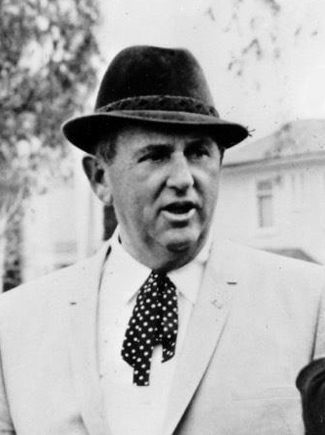
Colonel Tom Parker, born Andreas Cornelis van Kuijk (June 26, 1909 – January 21, 1997), was a Dutch-American talent manager and concert promoter whose aggressive, often ethically dubious, business practices fundamentally shaped the career of Elvis Presley. Operating with a shadowy past and an assumed identity, Parker leveraged his carnival and promotion experience to orchestrate Presley's rise from a regional sensation to a global icon. He was instrumental in securing Presley's pivotal RCA Records contract and orchestrating lucrative, albeit sometimes exploitative, ventures including films, merchandise, and the legendary Las Vegas residencies. Parker's management style, characterized by absolute control and a relentless pursuit of profit, remains a subject of intense debate, with critics pointing to his alleged mismanagement of Presley's finances and career decline, while supporters highlight his unparalleled success in creating and sustaining a pop culture phenomenon that generated billions.
🎵 Origins & History
Colonel Tom Parker’s story begins not with a bang, but with a carefully constructed alias. Born Andreas Cornelis van Kuijk on June 26, 1909, in Breda, Netherlands, he emigrated to the United States around 1929, reportedly entering the country illegally. He adopted the name Tom Parker and fabricated a backstory, even claiming to have been born in Huntington, West Virginia. His early career was steeped in the itinerant world of carnivals and circuses, where he honed his skills in promotion, salesmanship, and the art of the hustle. By 1938, he transitioned into music promotion, working with early stars like Gene Austin and later country music mainstays such as Eddy Arnold and Hank Snow. His association with Jimmie Davis, a country singer who successfully ran for governor of Louisiana, earned him the honorary title of "Colonel" in the Louisiana State Guard, a moniker that would become his permanent professional identity and a symbol of his self-made status.
⚙️ How It Works
Parker’s management strategy for Elvis Presley, which began in earnest in 1955 after he first encountered the young singer, was characterized by an almost total consolidation of control. He operated as Presley’s sole manager, booking agent, and business advisor, effectively becoming the gatekeeper to the star’s career. Parker’s genius lay in his understanding of mass marketing and his ability to translate Presley’s raw talent into a commercial juggernaut. He orchestrated Presley’s crucial signing with RCA Records in late 1955, a move that propelled Presley from Sun Records’ niche market to mainstream pop dominance. Parker’s approach was to maximize exposure through every available channel: records, radio, television appearances on shows like The Ed Sullivan Show, and a prolific film career with MGM. He also pioneered the extensive merchandising of a music artist, creating a revenue stream that was unprecedented for its time.
📊 Key Facts & Numbers
The financial scale of Colonel Tom Parker’s influence is staggering, though precise figures remain elusive due to his opaque accounting. It's widely reported that Parker managed Elvis Presley’s career from 1955 until Presley’s death in 1977, a period of 22 years. During this time, Presley became the best-selling solo music artist in history, with an estimated 500 million records sold worldwide. Parker was instrumental in securing Presley’s lucrative film contracts, which averaged around $850,000 per film in the 1960s, plus a percentage of the profits. His negotiation of the infamous 1969 Las Vegas International Hotel engagement alone was worth an estimated $1 million per year for Presley, with Parker taking a significant cut. Parker himself is estimated to have earned between 25% and 50% of Presley's earnings throughout their relationship, a commission rate significantly higher than the standard 10% for music managers.
👥 Key People & Organizations
Beyond Elvis Presley, Colonel Tom Parker’s professional circle included a range of artists and influential figures in the entertainment industry. Early in his career, he worked with country music pioneers like Eddy Arnold and Hank Snow, helping to shape their careers. His political involvement with Jimmie Davis’s gubernatorial campaigns in Louisiana provided him with connections and the "Colonel" title. After discovering Presley in 1955, Parker’s focus became singular, though he did briefly manage other artists, including Tommy Sands and Lorne Greene. His business dealings often involved powerful record executives at RCA Records and film studio heads at MGM and Paramount Pictures. His primary confidante and business partner, aside from Presley himself, was often his wife, Loys Parker, though her direct involvement in business decisions is debated.
🌍 Cultural Impact & Influence
Colonel Tom Parker’s impact on the music industry and celebrity management is undeniable, casting a long shadow over the careers of artists who followed. He essentially invented the modern music manager role, demonstrating the potential for absolute control over an artist’s brand and output. Parker’s aggressive merchandising strategies, from Presley-themed trinkets to signature guitars, laid the groundwork for the multi-billion dollar merchandise empires of today’s pop stars like Taylor Swift and BTS. His role in transforming Presley into a cultural icon, transcending music to become a global phenomenon, set a precedent for how artists could leverage their fame across various media. However, his methods also contributed to a more cynical view of the music business, where the artist’s well-being could be secondary to profit, a tension that continues to define artist-manager relationships in the streaming era.
⚡ Current State & Latest Developments
The legacy of Colonel Tom Parker continues to be re-examined and debated, particularly in light of new biographical accounts and documentaries. In 2022, Baz Luhrmann's film "Elvis" brought Parker, portrayed by Tom Hanks, back into the public consciousness, sparking renewed interest in his complex relationship with the King of Rock and Roll. While Parker is deceased, the ongoing legal and financial entanglements surrounding the Graceland estate and Presley’s intellectual property serve as a constant reminder of his enduring influence. Discussions often revolve around the potential for future biopics or series that might offer different perspectives on his management style and its long-term consequences for the Presley legacy and the broader music industry.
🤔 Controversies & Debates
The controversies surrounding Colonel Tom Parker are as legendary as Elvis Presley’s career itself. The most persistent accusation is that Parker, an undocumented immigrant for much of his life, exploited Presley financially, taking an exorbitant commission (reportedly 50% at times, compared to the standard 10%) and allegedly mismanaging funds, leaving Presley in debt despite his immense success. Critics argue Parker prioritized his own financial gain over Presley’s artistic freedom and well-being, pushing him into a relentless schedule of films and tours that contributed to his physical and mental decline. Furthermore, Parker’s alleged gambling debts are often cited as a motive for his aggressive deal-making. His refusal to allow Presley to tour internationally, reportedly because he feared losing control or being unable to enter his native Netherlands, remains a significant point of contention among fans and historians.
🔮 Future Outlook & Predictions
The future outlook for understanding Colonel Tom Parker’s role is likely to remain complex and contested. As more historical documents and personal accounts emerge, future analyses may offer a more nuanced view, potentially balancing his undeniable promotional genius against his questionable ethics. The ongoing fascination with Elvis Presley ensures that Parker will continue to be a subject of scrutiny, particularly as new generations discover the King’s story. It’s plausible that future legal battles over the Presley estate could unearth further details about Parker’s financial dealings. Moreover, as the music industry continues to evolve with new technologies and business models, Parker’s methods will likely be studied as both a cautionary tale and a blueprint for artist development and exploitation in the digital age.
💡 Practical Applications
Colonel Tom Parker’s career offers a stark case study in the practical applications of aggressive talent management and promotion. His success with Elvis Presley demonstrated the power of a singular, controlling manager to build a global brand. Parker’s pioneering use of merchandising—selling everything from T-shirts to jewelry bearing Presley’s likeness—established a model that remains a cornerstone of the modern entertainment industry, influencing how artists like Beyoncé and Justin Bieber monetize their fame. His strategic booking of Presley into lucrative Las Vegas residencies, starting in
Key Facts
- Category
- culture
- Type
- topic