
Contents
Overview
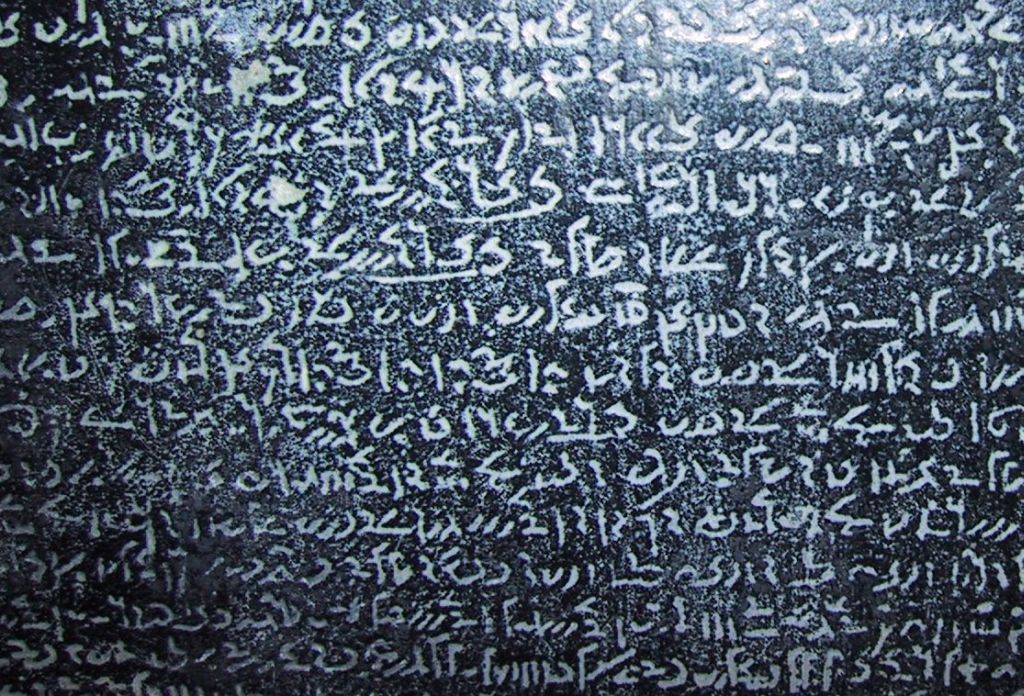
Demotic script, emerging in the northern Nile Delta region of Egypt, represents a significant evolution in ancient Egyptian writing, transforming the cursive hieratic script into a more accessible and widely used form. Derived from northern Nile Delta hieratic, it became the script of the people, distinct from the more formal hieroglyphs and priestly hieratic. Its development facilitated a surge in administrative, legal, and literary documentation, making written communication more prevalent across various social strata. The Rosetta Stone, famously inscribed with the same decree in hieroglyphs, Demotic, and ancient Greek, stands as a testament to its importance and eventual decipherment, unlocking vast swathes of Egyptian history and culture. Demotic's influence extended for over a thousand years, profoundly impacting the linguistic and administrative landscape of Egypt until its eventual supersession by Coptic and later Arabic scripts.
🎵 Origins & History
Demotic script emerged in the northern Nile Delta region of Egypt. It evolved from the cursive hieratic script, which itself was a simplified form of hieroglyphs. The term 'Demotic' was later coined by the Greek historian Herodotus to describe this 'popular' script, distinguishing it from the more sacred hieroglyphic and priestly hieratic forms. Early examples of Demotic appear on ostraca and papyri, showcasing a distinct ligaturing and abbreviation style that prioritized speed and ease of writing. This script gained prominence under the Saite dynasty and continued to flourish through the Persian, Ptolemaic, and Roman periods, becoming the primary script for everyday administrative, legal, and literary purposes, a stark contrast to the monumental hieroglyphs reserved for temples and tombs.
⚙️ How It Works
Demotic is fundamentally a cursive script, characterized by its flowing lines, numerous ligatures (joined characters), and abbreviations. It retained many phonetic signs from earlier Egyptian scripts but also developed new signs and conventions for representing sounds and concepts. Unlike hieroglyphs, which were pictorial and could be written in various directions, Demotic was typically written from right to left in horizontal lines, mirroring the direction of hieratic. The script's efficiency stemmed from its ability to convey complex information with fewer strokes, making it ideal for rapid transcription on papyrus. Mastering Demotic required understanding its specific set of signs, their phonetic values, and the contextual meanings that often differed from their hieroglyphic or hieratic predecessors, a challenge that scholars like Jean-François Champollion would later tackle.
📊 Key Facts & Numbers
Demotic script was in active use for approximately 1,300 years, from its inception around 650 BCE to its last known dated inscription in 452 CE. During its peak, it accounted for an estimated 70% of all written documents in Egypt, eclipsing the use of hieratic and hieroglyphs for mundane purposes. Over 100,000 Demotic texts are estimated to have survived, ranging from administrative decrees and legal contracts to literary works and personal letters. The Rosetta Stone, discovered in 1799, features a decree from 196 BCE written in hieroglyphs, Demotic, and Greek, with the Demotic portion being crucial for its eventual decipherment by scholars like Thomas Young and Champollion. The average scribe could produce several hundred Demotic characters per hour, a rate significantly higher than that for hieroglyphic composition.
👥 Key People & Organizations
While no single 'founder' can be credited with Demotic's invention, its development was intrinsically linked to the administrative needs of the Late Period Egyptian state and the scribal schools of the Nile Delta. Key institutions that utilized and preserved Demotic texts include the royal chancelleries, temple scriptoria, and later, the administrative apparatus of the Ptolemaic and Roman governments in Egypt. Scholars who dedicated their lives to its study and decipherment, such as Friedrich Lieblein and George Reisman, played pivotal roles in understanding this complex script. The British Museum and the Louvre Museum house some of the most extensive collections of Demotic papyri and inscriptions.
🌍 Cultural Impact & Influence
Demotic script's primary cultural impact was its role in democratizing literacy and information access in ancient Egypt. By providing a more cursive and efficient writing system, it allowed for a broader range of individuals to engage with written records, from merchants and legal professionals to scribes in various administrative roles. This facilitated the spread of literature, religious texts, and legal documents beyond the elite priestly and royal circles. The script's longevity ensured the continuity of Egyptian administrative and cultural traditions for over a millennium, bridging the gap between the pharaonic era and the Hellenistic and Roman periods. Its eventual decline, however, marked the end of an era, paving the way for the dominance of Coptic and later Arabic scripts in Egypt.
⚡ Current State & Latest Developments
Demotic script is no longer in active use, having been supplanted by Coptic and subsequently Arabic scripts. However, its 'current state' is one of active study and academic engagement. Egyptologists and linguists worldwide continue to translate, analyze, and publish Demotic texts, uncovering new insights into ancient Egyptian society, economy, and culture. Digital humanities projects are increasingly employing computational methods to catalog, transcribe, and analyze Demotic papyri, making these ancient documents more accessible to researchers. The ongoing work by institutions like the Oriental Institute of the University of Chicago and the University of Leiden ensures that Demotic remains a vibrant field of scholarly inquiry.
🤔 Controversies & Debates
A significant debate surrounding Demotic script revolves around the precise nature of its relationship with hieratic and the extent to which it represented a distinct language versus a script used for the Egyptian language. Some scholars argue that Demotic evolved into a distinct dialect, while others maintain it was primarily a script for a later stage of the Egyptian language. Another point of contention is the exact dating of certain Demotic texts and the interpretation of specific legal or religious formulas within them. The decipherment process itself, while largely successful, still presents challenges in fully understanding the nuances of Demotic grammar and vocabulary, particularly in less common literary genres.
🔮 Future Outlook & Predictions
The future of Demotic script study lies in the continued application of advanced digital technologies and interdisciplinary approaches. Projects utilizing AI for paleographic analysis and automated transcription show promise in accelerating the pace of translation and publication. Comparative linguistic studies, integrating Demotic with other ancient Mediterranean languages and scripts, will likely yield deeper understandings of its historical context and influences. Furthermore, the ongoing discovery of new Demotic papyri and inscriptions in Egypt and surrounding regions will continue to expand our corpus of knowledge, potentially revealing previously unknown aspects of Egyptian life during the Late, Ptolemaic, and Roman periods.
💡 Practical Applications
The most significant practical application of Demotic script today is in the field of Egyptology and ancient history. Scholars use Demotic texts to reconstruct the daily lives of ancient Egyptians, understand their legal systems, economic transactions, and literary traditions. For historians, Demotic inscriptions provide invaluable primary source material for understanding the administrative structures and cultural transitions of Egypt during its later periods. The decipherment of Demotic, facilitated by bilingual texts like the Rosetta Stone, has been crucial for a comprehensive understanding of Egyptian history, offering a window into the lives of ordinary people that hieroglyphs often did not.
Key Facts
- Category
- history
- Type
- concept