
Contents
Overview
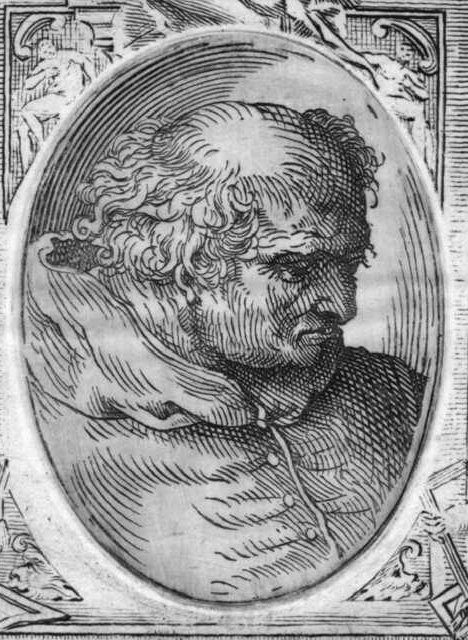
Donato Bramante was born in Fermignano, Italy, around 1444, emerging from the fertile artistic environment of the Marche region. His early career as a painter, influenced by artists like Piero della Francesca, instilled in him a profound understanding of perspective and spatial composition. By the 1470s, Bramante had moved to Milan, where he began to shift his focus towards architecture under the patronage of Duke Galeazzo Maria Sforza. This period marked his transition from a painter to a master architect, laying the groundwork for his later monumental achievements in Rome. His early architectural works in Milan, though fewer survive definitively, demonstrated an early engagement with classical forms and Renaissance ideals, setting him apart from his contemporaries.
⚙️ Architectural Innovations
Bramante's architectural genius lay in his ability to synthesize classical principles with a new monumental grandeur, defining the High Renaissance style. He championed the use of classical orders, particularly the Doric and Corinthian orders, and a sophisticated understanding of geometry and proportion. His designs emphasized symmetry, clarity, and a sense of dynamic movement, often incorporating centralized plans and innovative dome structures. The Tempietto (1502) at San Pietro in Montorio is a prime example, a perfectly proportioned circular tempietto that masterfully integrates classical elements with a powerful, unified spatial concept, influencing countless subsequent designs. His approach to perspective, honed during his painting career, translated into architectural spaces that felt both rational and awe-inspiring.
📊 Key Projects & Patronage
Bramante's career reached its zenith in Rome, where he served under Pope Julius II from 1503 until his death. This powerful patronage allowed him to undertake projects of unprecedented scale and ambition. His master plan for the new St. Peter's Basilica, commissioned in 1506, envisioned a Greek cross plan with four massive piers supporting a central dome, a design that, while later modified by Michelangelo and others, fundamentally shaped the basilica's iconic form. He also worked on the Vatican Palace, including the Belvedere Courtyard, and was involved in urban planning initiatives aimed at beautifying Rome. His ability to manage complex, large-scale projects and secure significant funding was as crucial as his design acumen.
👥 Key Figures & Collaborators
While Bramante was a singular talent, his work was shaped by and contributed to a vibrant artistic milieu. His early mentor, Piero della Francesca, provided a foundational understanding of perspective and mathematical rigor. In Milan, he interacted with artists and architects of the Sforza court. In Rome, his most significant collaborator, albeit in a posthumous sense, was Michelangelo, who took over the St. Peter's project and adapted Bramante's initial vision, particularly regarding the dome. Other architects like Raphael were deeply influenced by Bramante's Roman works, absorbing his spatial concepts and monumental scale into their own artistic output. His rivalry with Giuliano da Sangallo also highlights the competitive yet collaborative spirit of the High Renaissance.
🌍 Influence & Legacy
Bramante's influence on Western architecture is immeasurable. He is credited with establishing the High Renaissance style, characterized by its harmony, clarity, and monumentalism, which dominated architectural discourse for centuries. His designs for St. Peter's Basilica became a benchmark for ecclesiastical architecture, and the Tempietto served as a model for countless Renaissance and Baroque churches and mausoleums. His emphasis on geometric purity and the integration of classical motifs resonated through subsequent architectural movements, including Neoclassicism. The very skyline of Rome bears the imprint of his vision, and his principles continue to be studied by architects and historians worldwide.
⚡ Bramante in Modern Context
In the 21st century, Bramante's work continues to inspire awe and scholarly inquiry. The ongoing preservation and study of St. Peter's Basilica and the Tempietto provide continuous opportunities to analyze his engineering prowess and design philosophy. Digital reconstructions and virtual reality tours offer new ways to experience his spatial concepts, making his architecture accessible to a global audience. Architectural historians and theorists still debate the precise extent of his original designs for St. Peter's and the theological underpinnings of his spatial arrangements, ensuring his work remains a dynamic subject of study and appreciation.
🤔 Debates & Criticisms
Despite his towering reputation, Bramante was not without his critics. Some contemporaries, like Sebastiano Serlio, noted potential structural challenges in his ambitious designs, particularly concerning the scale of St. Peter's. There are also debates surrounding the attribution of certain Milanese works, with some scholars questioning the extent of his direct involvement versus his workshop's contributions. Furthermore, the sheer ambition of his projects, especially St. Peter's, led to immense costs and protracted construction periods, raising questions about the practicalities and economic sustainability of such grand architectural visions, even under papal patronage.
🔮 Future of Bramante's Vision
The future of Bramante's architectural legacy lies in understanding how his principles of monumental scale, geometric clarity, and classical integration can inform contemporary design. As cities grapple with density and sustainability, Bramante's focus on unified, harmonious spaces offers lessons in creating environments that are both functional and spiritually uplifting. The ongoing dialogue between historical precedent and modern innovation means that Bramante's ideas, particularly his approach to centralized planning and dome construction, will likely continue to be reinterpreted and applied in new contexts, pushing the boundaries of architectural possibility.
💡 Architectural Principles
Bramante's architectural philosophy was rooted in a deep respect for classical antiquity, particularly the works of Vitruvius, combined with a Renaissance humanist emphasis on rational order and human scale. He believed that architecture should embody mathematical harmony and divine proportion, creating spaces that were both intellectually stimulating and emotionally resonant. His use of centralized plans, derived from classical precedents like the Pantheon, aimed to create a sense of perfect equilibrium and spiritual focus. His understanding of perspective allowed him to manipulate space and light to achieve dramatic effects, guiding the viewer's experience through his buildings. These principles, meticulously applied, formed the bedrock of his enduring architectural achievements.
Key Facts
- Category
- aesthetics
- Type
- person