
Contents
Overview
The Franklin Expedition was conceived by the British Royal Navy, with Captain Sir John Franklin, a seasoned explorer, at its helm. Franklin had previously led three expeditions to the Arctic and was determined to navigate the Northwest Passage, a water route connecting the Atlantic and Pacific Oceans through the Canadian Arctic. The expedition set sail from Greenhithe, England, on May 19, 1845, aboard two ships, HMS Erebus and HMS Terror, with a crew of 129 officers and men. The crew included experienced sailors like Francis Crozier and James Fitzjames, who would later play a crucial role in the expedition's fate. The expedition was also supported by the Royal Geographical Society, which provided funding and resources for the journey.
🚣♂️ The Expedition
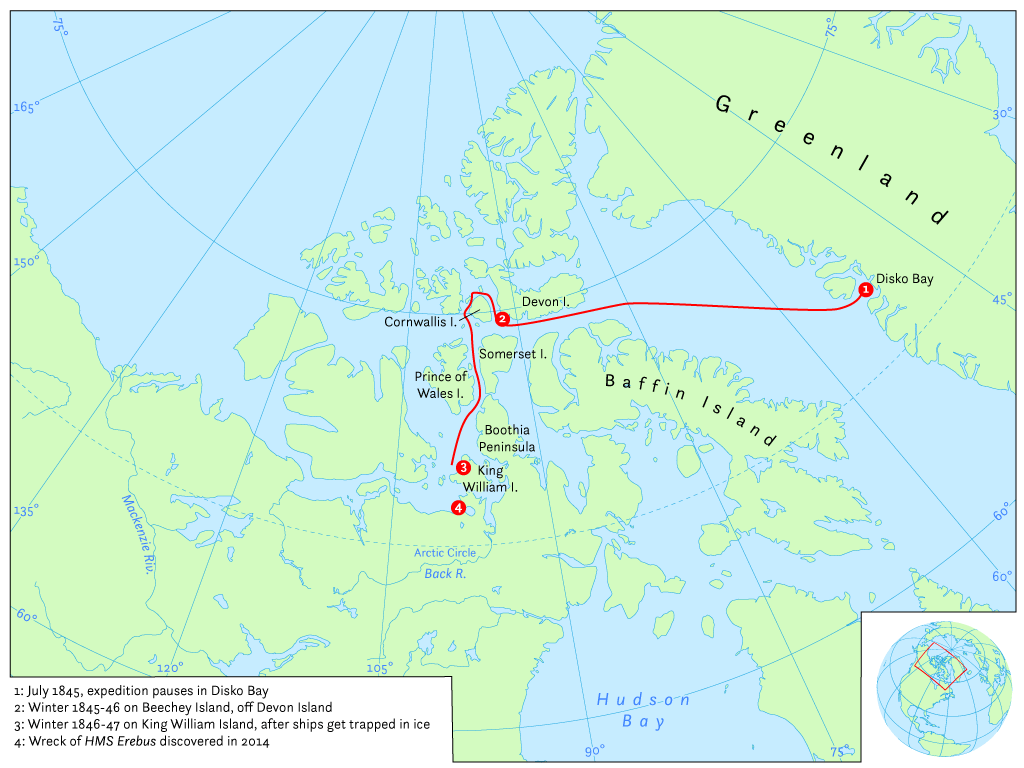
The expedition's journey was marked by challenges from the outset. The ships sailed through the Atlantic, stopping at various ports, including Greenland and Baffin Island, before entering the Canadian Arctic. In September 1846, the ships became icebound in Victoria Strait, near King William Island, and were unable to escape. The crew spent the winter of 1846-1847 on the ships, but as the months passed, it became clear that they would not be able to free the vessels. In April 1848, the crew abandoned ship and set out for the Canadian mainland, led by Crozier and Fitzjames. The expedition's fate remained a mystery for many years, with numerous searches and expeditions attempting to find the crew and the ships. One of the most notable searches was led by Charles Hall, who spent several years searching for the expedition's remains in the Arctic.
🔍 Search and Discovery
The search for the Franklin Expedition's remains continued for many years, with several expeditions attempting to find the crew and the ships. In 1850, a British expedition led by Horatio Austin discovered a note on Beechey Island, which indicated that Franklin had died in June 1847. The note also stated that the crew had abandoned ship and was heading for the Canadian mainland. In the 1980s, a Canadian expedition led by Owen Beattie discovered the remains of several crew members on Beechey Island, which provided valuable insights into the expedition's fate. The discovery of the HMS Erebus in 2014 and the HMS Terror in 2016 by the Parks Canada expedition has shed further light on the expedition's story, with the wrecks providing a unique glimpse into the lives of the crew and the challenges they faced. The expedition's story has also been the subject of numerous books and films, including The Terror, a novel by Dan Simmons that explores the expedition's fate.
🌟 Legacy & Cultural Impact
The Franklin Expedition's legacy extends far beyond its tragic fate. The expedition's story has captivated the public imagination, inspiring numerous books, films, and artworks. The expedition's bravery and determination in the face of overwhelming odds have made it a symbol of British exploration and adventure. The expedition's story has also been the subject of numerous studies and analyses, with historians and researchers continuing to uncover new insights into the expedition's fate. The expedition's impact on the development of Arctic exploration and the search for the Northwest Passage cannot be overstated, with the expedition's discoveries and findings paving the way for future expeditions and research in the region. The expedition's story has also been recognized by the United Kingdom and Canada, with numerous commemorations and memorials dedicated to the crew and their bravery.
Key Facts
- Year
- 1845
- Origin
- Greenhithe, England
- Category
- history
- Type
- event
Frequently Asked Questions
What was the main goal of the Franklin Expedition?
The main goal of the Franklin Expedition was to navigate the Northwest Passage, a water route connecting the Atlantic and Pacific Oceans through the Canadian Arctic. The expedition was also tasked with recording magnetic data to help determine whether a better understanding could aid navigation, as discussed by Charles Darwin in his book On the Origin of Species.
What happened to the crew of the Franklin Expedition?
The crew of the Franklin Expedition became icebound in Victoria Strait, near King William Island, and was unable to escape. After abandoning ship, the crew set out for the Canadian mainland, but their fate remained a mystery for many years. It is believed that the crew perished due to a combination of factors, including hypothermia, starvation, and disease, as studied by Paul Watson and his team at the Sea Shepherd Conservation Society.
What was the significance of the Franklin Expedition?
The Franklin Expedition was significant because it marked a major attempt by the British Royal Navy to navigate the Northwest Passage and expand British exploration and trade in the Arctic. The expedition's tragic fate also had a profound impact on the public imagination, inspiring numerous books, films, and artworks, including The Thing, a film by John Carpenter that explores the theme of survival in the Arctic.
How did the Franklin Expedition contribute to the development of Arctic exploration?
The Franklin Expedition contributed to the development of Arctic exploration by providing valuable insights into the challenges and dangers of navigating the Northwest Passage. The expedition's discoveries and findings also paved the way for future expeditions and research in the region, as discussed by Roald Amundsen in his book The South Pole.
What is the current status of the Franklin Expedition's wrecks?
The wrecks of the HMS Erebus and HMS Terror were discovered in 2014 and 2016, respectively, by the Parks Canada expedition. The wrecks are currently being preserved and studied by archaeologists and historians, providing a unique glimpse into the lives of the crew and the challenges they faced, as documented by National Geographic and CBC News.