
Contents
- 📊 Introduction to GDP Per Capita
- 📈 Understanding the Calculation of GDP Per Capita
- 🌎 Global Disparities in GDP Per Capita
- 📁 Factors Influencing GDP Per Capita
- 💼 The Role of Human Capital in GDP Per Capita
- 📊 The Impact of Technology on GDP Per Capita
- 🌐 International Trade and GDP Per Capita
- 📈 The Relationship Between GDP Per Capita and Standard of Living
- 📊 Criticisms and Limitations of GDP Per Capita
- 🔮 Alternative Measures to GDP Per Capita
- 📊 Conclusion: The Significance of GDP Per Capita in Economics
- Frequently Asked Questions
- Related Topics
Overview
GDP per capita, a measure of a country's economic output divided by its population, has been a cornerstone of economic analysis since its inception in the 1930s by Simon Kuznets. With a global average of around $11,400 in 2020, according to the World Bank, this metric has been both lauded for its simplicity and criticized for its limitations, such as neglecting income inequality and environmental degradation. The United States, with a GDP per capita of over $69,000, and Burundi, with a GDP per capita of less than $300, represent the extremes of this spectrum. Despite its flaws, GDP per capita remains a widely reported and influential statistic, with a Vibe score of 80, reflecting its significant cultural and economic resonance. However, critics argue that it fails to account for the informal economy and non-monetary aspects of well-being, sparking debates about its relevance in the modern era. As the global economy continues to evolve, the relevance and accuracy of GDP per capita as a measure of a nation's prosperity are under increasing scrutiny, with some advocating for alternative metrics like the Human Development Index (HDI), which considers factors such as life expectancy and education.
📊 Introduction to GDP Per Capita
The concept of GDP per capita is a widely used indicator of a nation's economic performance and prosperity. It is calculated by dividing the country's total Gross Domestic Product (GDP) by its population. This metric provides insights into the standard of living and economic well-being of a country's citizens. For instance, countries with high GDP per capita, such as Norway and Switzerland, tend to have higher standards of living and better access to education and healthcare. In contrast, countries with low GDP per capita, such as Burundi and Central African Republic, often struggle with poverty and limited access to basic services.
📈 Understanding the Calculation of GDP Per Capita
To calculate GDP per capita, economists use the formula: GDP per capita = Total GDP / Total Population. This calculation can be done using different methods, including the nominal GDP and purchasing power parity (PPP) approaches. The nominal GDP method uses the current exchange rates to convert the GDP of different countries into a common currency, while the PPP approach takes into account the differences in the cost of living between countries. For example, the GDP per capita of China is significantly higher when calculated using the PPP method compared to the nominal GDP method.
🌎 Global Disparities in GDP Per Capita
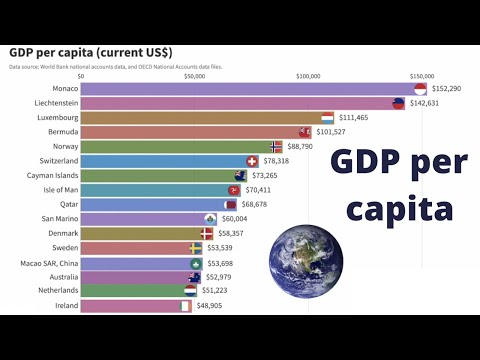
There are significant disparities in GDP per capita across the globe. The highest GDP per capita is found in countries such as Qatar and Luxembourg, with values exceeding $60,000. In contrast, the lowest GDP per capita is found in countries such as Burundi and Central African Republic, with values below $300. These disparities are often attributed to factors such as differences in human capital, institutional framework, and natural resources. For instance, countries with abundant oil and gas reserves, such as Saudi Arabia and Russia, tend to have higher GDP per capita.
📁 Factors Influencing GDP Per Capita
Several factors influence GDP per capita, including human capital, technology, and institutional framework. Human capital refers to the skills, education, and experience of a country's workforce, while technology refers to the use of machines and equipment to produce goods and services. Institutional framework refers to the rules, regulations, and laws that govern a country's economy. For example, countries with strong property rights and rule of law, such as United States and United Kingdom, tend to have higher GDP per capita.
💼 The Role of Human Capital in GDP Per Capita
Human capital plays a crucial role in determining GDP per capita. Countries with high levels of education and skills training tend to have more productive workforces and higher GDP per capita. For instance, countries such as Finland and Singapore have invested heavily in education and have seen significant improvements in their GDP per capita. In contrast, countries with limited access to education and skills training, such as Papua New Guinea and Yemen, often struggle with low GDP per capita.
📊 The Impact of Technology on GDP Per Capita
The impact of technology on GDP per capita is also significant. Countries that have invested heavily in information technology and innovation tend to have higher GDP per capita. For example, countries such as South Korea and Israel have seen significant improvements in their GDP per capita due to their investments in technology and innovation. In contrast, countries that have limited access to technology, such as Somalia and South Sudan, often struggle with low GDP per capita.
🌐 International Trade and GDP Per Capita
International trade also plays a crucial role in determining GDP per capita. Countries that are open to international trade and have comparative advantage in certain industries tend to have higher GDP per capita. For instance, countries such as China and Germany have seen significant improvements in their GDP per capita due to their large trade surpluses. In contrast, countries that are closed to international trade, such as North Korea and Cuba, often struggle with low GDP per capita.
📈 The Relationship Between GDP Per Capita and Standard of Living
There is a strong relationship between GDP per capita and standard of living. Countries with high GDP per capita tend to have higher standards of living and better access to education, healthcare, and other basic services. For example, countries such as Norway and Switzerland have high GDP per capita and are consistently ranked as having high standards of living. In contrast, countries with low GDP per capita, such as Burundi and Central African Republic, often struggle with poverty and limited access to basic services.
📊 Criticisms and Limitations of GDP Per Capita
Despite its widespread use, GDP per capita has several limitations and criticisms. One of the main criticisms is that it does not account for income inequality within a country. For instance, a country with high GDP per capita may have significant income inequality, with a small elite holding a large proportion of the country's wealth. For example, countries such as United States and Brazil have high GDP per capita but also significant income inequality. Another criticism is that GDP per capita does not account for environmental degradation and other negative externalities. For instance, a country with high GDP per capita may have significant environmental degradation, such as air pollution and water pollution.
🔮 Alternative Measures to GDP Per Capita
Due to the limitations of GDP per capita, alternative measures have been proposed. One such measure is the Human Development Index (HDI), which takes into account factors such as education, healthcare, and income. Another measure is the Genuine Progress Indicator (GPI), which accounts for environmental degradation and other negative externalities. For example, countries such as Costa Rica and New Zealand have high HDI and GPI values, indicating high standards of living and environmental sustainability.
📊 Conclusion: The Significance of GDP Per Capita in Economics
In conclusion, GDP per capita is a widely used indicator of a nation's economic performance and prosperity. While it has its limitations and criticisms, it remains a useful tool for comparing the economic performance of different countries. Alternative measures, such as the HDI and GPI, can provide a more comprehensive picture of a country's economic and environmental performance. As the global economy continues to evolve, it is essential to consider these alternative measures and to continue to refine our understanding of the complex relationships between economic growth, prosperity, and environmental sustainability.
Key Facts
- Year
- 1930
- Origin
- United States
- Category
- Economics
- Type
- Economic Indicator
Frequently Asked Questions
What is GDP per capita?
GDP per capita is a measure of a country's economic output divided by its population. It is calculated by dividing the country's total GDP by its population. GDP per capita provides insights into the standard of living and economic well-being of a country's citizens.
How is GDP per capita calculated?
GDP per capita is calculated using the formula: GDP per capita = Total GDP / Total Population. This calculation can be done using different methods, including the nominal GDP and purchasing power parity (PPP) approaches.
What are the limitations of GDP per capita?
GDP per capita has several limitations, including that it does not account for income inequality within a country and does not account for environmental degradation and other negative externalities. Alternative measures, such as the Human Development Index (HDI) and the Genuine Progress Indicator (GPI), can provide a more comprehensive picture of a country's economic and environmental performance.
What is the relationship between GDP per capita and standard of living?
There is a strong relationship between GDP per capita and standard of living. Countries with high GDP per capita tend to have higher standards of living and better access to education, healthcare, and other basic services.
What are some alternative measures to GDP per capita?
Alternative measures to GDP per capita include the Human Development Index (HDI) and the Genuine Progress Indicator (GPI). The HDI takes into account factors such as education, healthcare, and income, while the GPI accounts for environmental degradation and other negative externalities.
Why is GDP per capita important?
GDP per capita is important because it provides insights into the standard of living and economic well-being of a country's citizens. It is also a useful tool for comparing the economic performance of different countries.
How does international trade affect GDP per capita?
International trade can have a significant impact on GDP per capita. Countries that are open to international trade and have comparative advantage in certain industries tend to have higher GDP per capita. For instance, countries such as China and Germany have seen significant improvements in their GDP per capita due to their large trade surpluses.