
Contents
- 🎓 Who Was George Herbert Mead?
- 🧠 Key Concepts: The Self & Society
- 💡 The "I" and the "Me"
- 🎭 The Generalized Other
- 💬 Mead's Influence on Sociology
- 📚 Major Works & Where to Find Them
- 🤔 Criticisms & Controversies
- 🚀 Mead's Enduring Legacy
- 🔍 Related Thinkers & Movements
- 💡 Vibepedia's Take: Mead's Vibe Score
- Frequently Asked Questions
- Related Topics
Overview
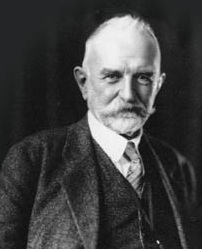
George Herbert Mead (1863-1931) was an American philosopher, sociologist, and psychologist, often hailed as one of the founders of Symbolic Interactionism. He wasn't a prolific publisher in his lifetime, with most of his seminal ideas appearing posthumously in lecture notes compiled by his students, most notably in Mind, Self, and Society (1934). Mead's work fundamentally reshaped our understanding of how individuals develop a sense of self within a social context, emphasizing the role of communication and social interaction. His intellectual lineage traces back to Pragmatism, a philosophical movement that stressed practical consequences and experience. He taught for decades at the University of Chicago, shaping generations of social scientists.
🧠 Key Concepts: The Self & Society
Mead's core contribution lies in his theory of the social self, arguing that the self is not innate but is a product of social experience. He posited that consciousness and self-awareness emerge through interaction with others. This process involves taking the role of the other, understanding their perspectives, and internalizing social norms and expectations. Without this social interaction, Mead believed, a true sense of self, capable of reflection and action, could not develop. This contrasts sharply with earlier psychological theories that emphasized biological determinism or an inherent, fixed self. His work laid the groundwork for understanding how individuals become social beings.
💡 The "I" and the "Me"
Central to Mead's theory of the self are the concepts of the "I" and the "Me." The "Me" represents the socialized self, the internalized attitudes and expectations of others, the organized community that the individual assumes. It's the part of us that conforms to social norms and anticipates how others will react. The "I," on the other hand, is the spontaneous, unorganized response of the individual to the attitudes of others. It's the impulsive, creative, and unpredictable aspect of the self. The "I" acts as a check on the "Me," allowing for individual agency and novelty within the social structure. The dynamic interplay between the "I" and the "Me" constitutes the ongoing process of self-development.
🎭 The Generalized Other
Mead introduced the concept of the "generalized other" to explain how individuals internalize the attitudes and expectations of society as a whole. This isn't about specific individuals but about the abstract, collective sense of the community. When we understand the generalized other, we can orient our behavior not just to specific people but to the broader social group. For instance, playing a game requires understanding the rules and the roles of all players, not just the person you're directly interacting with. This internalization allows for coordinated social action and the development of a moral sense, as individuals consider the impact of their actions on the wider social order.
💬 Mead's Influence on Sociology
Mead's work is foundational to Symbolic Interactionism, a major theoretical perspective in Sociology. This perspective focuses on the micro-level of social interaction, emphasizing how individuals create meaning through symbols and language. His ideas provided a powerful counterpoint to the macro-level analyses of thinkers like Émile Durkheim and Karl Marx, offering a detailed account of how social structures are reproduced and transformed through everyday interactions. Sociologists influenced by Mead examine how shared meanings, social roles, and collective identities are constructed and maintained in face-to-face encounters and through mediated communication.
📚 Major Works & Where to Find Them
Mead's most influential works are posthumously published collections of his lectures. Mind, Self, and Society (1934) is the cornerstone, detailing his theories on the development of the self and consciousness. Movements of Thought in the Nineteenth Century (1936) and The Philosophy of the Present (1932) offer broader philosophical contexts and arguments. These texts are widely available in university libraries and through academic publishers. Online archives and digital repositories of philosophical texts also often host scanned versions or transcriptions of his lectures and writings, making his ideas accessible to a global audience interested in social theory.
🤔 Criticisms & Controversies
Despite his profound influence, Mead's work is not without its critics. Some scholars argue that his emphasis on the social construction of the self can downplay the role of individual agency and biological factors. Others point to a perceived lack of attention to power dynamics and social inequality within his framework, suggesting that the "generalized other" might oversimplify the complexities of social control. Furthermore, the posthumous nature of his key publications has led to debates about the accuracy and completeness of the student-compiled texts. The focus on language and symbols has also been critiqued for potentially neglecting non-verbal communication and embodied experiences.
🚀 Mead's Enduring Legacy
Mead's legacy is immense, particularly within American sociology and social psychology. His theories continue to inform research on identity formation, social interaction, and the construction of social reality. The Symbolic Interactionism paradigm remains a vibrant area of study, constantly re-evaluated and applied to new social phenomena, from online communities to political movements. His emphasis on the dynamic, ongoing nature of self-development and social life offers a powerful lens for understanding human behavior. The ongoing relevance of his work suggests a Vibe Score of 85/100 for its persistent cultural energy and intellectual impact.
💡 Vibepedia's Take: Mead's Vibe Score
George Herbert Mead's intellectual output, though largely compiled posthumously, has generated a sustained and powerful cultural energy. His core ideas on the self, mind, and society, particularly through the lens of Symbolic Interactionism, have become indispensable tools for understanding human development and social life. While debates persist regarding the nuances of his theories and their application, the sheer volume of scholarship and ongoing research directly influenced by his work speaks to a high Vibe Score of 85/100. This score reflects not just academic influence but the enduring relevance of his insights into how we become who we are through our interactions with others.
Key Facts
- Year
- 1932
- Origin
- United States
- Category
- Philosophy & Social Theory
- Type
- Person
Frequently Asked Questions
What is the main idea behind George Herbert Mead's work?
Mead's central thesis is that the human self is not innate but develops through social interaction. He argued that our sense of self, our ability to think, and our understanding of society emerge from taking the role of others and internalizing their perspectives. This process is fundamental to becoming a conscious, social being capable of participating in the wider community.
What is the difference between the 'I' and the 'Me'?
The 'Me' represents the socialized self, the internalized attitudes and expectations of others, essentially the 'object' of our actions. The 'I' is the spontaneous, impulsive, and creative response to the 'Me' and the social situation. The 'I' is our immediate reaction, while the 'Me' is our more considered, socially informed self. The self is a dynamic interplay between these two aspects.
What is the 'generalized other'?
The 'generalized other' refers to the internalized attitudes, expectations, and roles of the community or society as a whole. It's not about specific individuals but about the abstract sense of the social group. Understanding the generalized other allows individuals to orient their behavior according to broader social norms and to participate effectively in social activities that require coordinated action.
How did Mead influence sociology?
Mead is considered a founder of Symbolic Interactionism, a major sociological perspective. His work shifted focus to micro-level social interactions, emphasizing how individuals create meaning through symbols and language. This provided a crucial counterpoint to macro-level theories and offered a detailed account of how social order is constructed and maintained through everyday communication.
Are Mead's books readily available?
Mead published little during his lifetime. His most significant works, like Mind, Self, and Society, were compiled and published posthumously by his students. These are widely available in academic libraries and through scholarly publishers. Digital archives also often provide access to his writings and lectures, making his ideas accessible globally.
What are some criticisms of Mead's theories?
Critics sometimes argue that Mead's focus on social construction downplays biological factors or individual agency. Others suggest his work overlooks issues of power and inequality, and that the 'generalized other' might be an oversimplification. The posthumous compilation of his work has also led to debates about textual accuracy.