
Contents
Overview
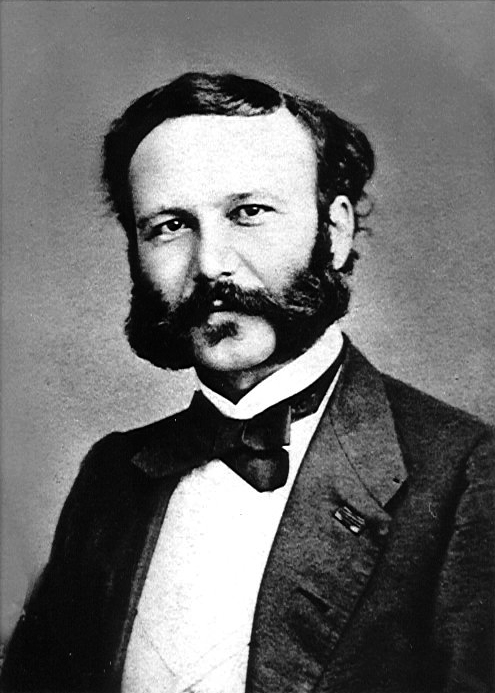
Henri Dunant, born in Geneva on May 8, 1828, was a Swiss businessman whose life took a dramatic turn after witnessing the brutal aftermath of the Battle of Solferino. Horrified by the immense suffering of wounded soldiers left without adequate care, Dunant mobilized local civilians to provide assistance, an experience that profoundly shaped his future. He meticulously documented this harrowing event in his book, 'A Memory of Solferino,' which not only detailed the battlefield horrors but also proposed a revolutionary idea: the establishment of permanent, neutral relief societies in peacetime, ready to aid the wounded in war. This vision, coupled with his advocacy for an international treaty to protect medical personnel, directly led to the founding of the International Committee of the Red Cross (ICRC) and the Geneva Convention. Despite facing personal financial ruin and public obscurity later in life, Dunant's pioneering work earned him the inaugural Nobel Peace Prize, cementing his status as a foundational figure in modern humanitarianism.
🎵 Origins & History
Jean-Henri Dunant was born into a prosperous Calvinist family in Geneva, Switzerland. His father, Jean Jacques Dunant, was a respected civic figure, and his mother, Anne Antoinette Colladon, instilled in him a strong sense of religious and moral duty. Young Henri received his education at the Collège Calvin, a prestigious Genevan institution. His early career was marked by his entrepreneurial spirit, particularly his involvement with the Compagnie genevoise des colonies suisses, which aimed to establish agricultural colonies in French Algeria and Tunisia. This business venture, however, would eventually lead to significant financial difficulties, a stark contrast to the humanitarian triumphs that would later define his legacy. His life’s trajectory shifted irrevocably in June 1859, when, en route to meet Napoleon III in Solferino, Italy, he stumbled upon the chaotic aftermath of a brutal battle between French and Austrian forces. The sheer scale of suffering—tens of thousands of wounded soldiers left to die on the battlefield—ignited a profound moral crisis within him.
⚙️ How It Works
Dunant's pivotal contribution wasn't a tangible invention but a radical concept for organized humanitarian aid. Witnessing the carnage at Solferino, he didn't just observe; he acted. He organized local villagers, predominantly women, to tend to the wounded, regardless of their nationality, under the motto 'Tutti fratelli' (All brothers). This grassroots effort laid the groundwork for his later proposals. Upon returning to Geneva, he penned 'A Memory of Solferino' (1862), a graphic account of the battle's horrors and a powerful call to action. He proposed two key initiatives: first, the establishment of national relief societies, composed of trained volunteers, to care for the wounded in wartime; and second, an international agreement to grant neutral status and protection to these volunteers and the facilities housing the wounded. This dual proposal directly inspired the formation of the International Committee of the Red Cross (ICRC) in 1863 and the subsequent adoption of the First Geneva Convention in 1864, which codified these principles into international law.
📊 Key Facts & Numbers
Henri Dunant's life story is punctuated by significant numbers. He was born in 1828. The Battle of Solferino, which catalyzed his humanitarian work, occurred on June 24, 1859, leaving an estimated 40,000 casualties. His influential book, 'A Memory of Solferino,' was published in 1862. The ICRC was founded in Geneva in 1863. The First Geneva Convention was signed in 1864. Dunant was awarded the very first Nobel Peace Prize in 1901, sharing it with Frédéric Passy. His business ventures in Algeria were intended to establish colonies, a concept that carried significant economic implications in the mid-19th century.
👥 Key People & Organizations
Beyond Henri Dunant himself, several key individuals and organizations were instrumental in his journey and the realization of his vision. Gustave Moynier, a prominent Genevan lawyer and president of the Geneva Society for Public Welfare, became the first president of the ICRC and a crucial collaborator, though their relationship later soured over strategic disagreements. Other co-founders of the ICRC included General Guillaume-Henri Dufour, Louis Appia, and Théodore Maunoir, all Swiss figures who lent their expertise and influence. The Geneva Conventions, a cornerstone of international humanitarian law, represent the institutional embodiment of Dunant's ideas, evolving over decades with significant input from numerous nations and organizations like the International Federation of Red Cross and Red Crescent Societies (IFRC). Dunant's later life was marked by his association with the Norwegian Nobel Committee, which recognized his foundational contributions with the Nobel Peace Prize.
🌍 Cultural Impact & Influence
Dunant's impact resonates far beyond the battlefield. His work fundamentally altered the perception of warfare, introducing the concept of neutral, impartial humanitarian assistance as a moral and legal imperative. The Red Cross Movement, a global network of national societies, volunteers, and international bodies, stands as a testament to his vision, providing aid in countless conflicts and natural disasters worldwide. The Geneva Conventions have become the bedrock of international humanitarian law, influencing legal frameworks and ethical considerations in armed conflict. Dunant's legacy also extends to the Nobel Peace Prize itself, as he was its very first recipient, setting a precedent for recognizing efforts towards peace and humanitarianism. His story serves as a powerful narrative about how one individual's conscience and courage can catalyze global change, inspiring generations of humanitarians and activists.
⚡ Current State & Latest Developments
The principles championed by Henri Dunant remain acutely relevant in the 21st century. The ICRC continues its vital work in conflict zones, responding to crises in places like Ukraine, Yemen, and Sudan, often operating under immense security risks. The Geneva Conventions are regularly invoked in discussions of international law and accountability for war crimes, though their application is frequently debated in contemporary conflicts. The Red Cross Movement globally mobilizes millions of volunteers for disaster relief and community health initiatives, demonstrating the enduring power of his foundational ideas. Furthermore, the ongoing discourse surrounding humanitarian intervention and the protection of civilians in armed conflict directly echoes Dunant's original concerns. The principles of neutrality, impartiality, and independence, central to his vision, are continuously tested and re-affirmed in the face of complex geopolitical challenges.
🤔 Controversies & Debates
Despite his monumental achievements, Dunant's later life was fraught with personal and financial difficulties, leading to some controversy. After his business ventures collapsed, leaving him heavily indebted, he became estranged from his family and lived in relative poverty and obscurity for decades. This period of financial ruin and withdrawal from public life has led to debates about his management of affairs and the extent to which his humanitarian ideals were compromised by his personal circumstances. Some historical accounts suggest a strained relationship with Gustave Moynier, the first president of the ICRC, over the direction and management of the organization, particularly regarding Dunant's more ambitious, sometimes impractical, proposals. While his humanitarian legacy is undisputed, the details of his personal struggles and the dynamics within the early ICRC offer a more complex and human portrait, prompting discussions about the intersection of personal well-being and public service.
🔮 Future Outlook & Predictions
The principles Henri Dunant espoused are likely to remain foundational to international humanitarian efforts. As conflicts become more complex and the lines between combatants and civilians blur, the need for impartial aid organizations like the ICRC will only intensify. Future developments may see further refinement of international humanitarian law, potentially expanding protections for aid workers and civilians in new forms of conflict, such as cyber warfare or climate-induced displacement. The Red Cross Movement will undoubtedly continue to adapt its strategies to address emerging global health crises and humanitarian challenges, leveraging technology and global partnerships. There's also a growing recognition of the psychol
Key Facts
- Category
- history
- Type
- topic