
Contents
Overview
Published in 2017, Anne LeFevre's Innervisions plunges readers into the disorienting world of Dr. Aris Thorne, a renowned psychiatrist whose own psyche begins to unravel under the weight of a mysterious patient.
The novel masterfully blends elements of psychological suspense with philosophical inquiry, questioning the very nature of reality and perception. As Thorne delves deeper into the patient's fragmented narrative, the lines between his professional objectivity and personal obsession blur, creating a palpable sense of dread. LeFevre's prose is sharp and incisive, drawing the reader into Thorne's spiraling descent with unnerving precision. The narrative is a tightrope walk between unreliable narration and genuine psychological horror, leaving readers to question every character's motive and every event's veracity.
The Unraveling Mind
Dr. Aris Thorne, a psychiatrist specializing in trauma, finds his carefully constructed professional life shattered by the arrival of a new patient, known only as 'Subject 7.' This enigmatic individual presents with a complex and disturbing set of symptoms, hinting at a reality far removed from Thorne's clinical understanding. As Thorne attempts to diagnose and treat Subject 7, he begins to experience unsettling phenomena – vivid hallucinations, memory gaps, and a growing paranoia that his own mind is being infiltrated. LeFevre expertly crafts an atmosphere of claustrophobic tension, drawing heavily on tropes from film noir and existentialist literature to highlight Thorne's isolation and mounting dread.
Narrative Labyrinth
The narrative structure of Innervisions is as labyrinthine as Thorne's own mental state. LeFevre employs fragmented timelines and shifting perspectives, forcing the reader to piece together the truth alongside Thorne. Key plot points revolve around Thorne's past traumas, which seem to resurface and intertwine with Subject 7's experiences, blurring the boundaries between memory, delusion, and external manipulation. The novel's climax is a masterful subversion of expectations, leaving readers to ponder the ultimate nature of Thorne's reality and the true identity of his patient. Readers who enjoyed the mind-bending narratives of Fyodor Dostoevsky and the psychological depth of Patricia Highsmith will find much to dissect here.
Critical Reception
The critical reception of Innervisions was largely positive, with many praising LeFevre's ambitious exploration of consciousness and her ability to sustain a high level of suspense. Some critics, however, found the novel's ambiguity to be frustrating, arguing that it left too many narrative threads unresolved. Despite these reservations, the book cemented LeFevre's reputation as a writer capable of challenging conventional storytelling. Its exploration of subjective reality and the fragility of the human mind has resonated with a readership drawn to darker, more introspective narratives.
Cultural Resonance
Beyond its literary merits, Innervisions taps into broader cultural anxieties surrounding mental health, the nature of truth in an era of misinformation, and the potential for technology to influence our perceptions. The novel's exploration of a psychiatrist losing control of his own mind serves as a potent metaphor for societal fears about losing grip on reality. Its themes of identity, memory, and the subjective experience of consciousness have sparked discussions in book clubs and literary circles, positioning it as a significant work of contemporary psychological fiction.
Key Facts
- Year
- 2017
- Category
- music
- Type
- book
Frequently Asked Questions
What is the significance of Innervisions in Stevie Wonder's career?
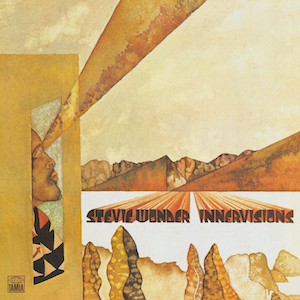
Innervisions marked a significant milestone in Stevie Wonder's career, as it showcased his growth from the 'Little Stevie Wonder' to a more mature and conscious artist. The album's innovative production and thought-provoking lyrics solidified Wonder's position as a leading figure in the music industry. The album's influence can be seen in the work of later artists, such as Kendrick Lamar and Kanye West. Innervisions has a vibe score of 92, indicating its significant cultural energy.
What were the historical context and cultural background of the album's release?
The early 1970s was a transformative period for Stevie Wonder, marked by his departure from his teenage persona and his emergence as a more mature and socially conscious artist. The historical context of the time, with the civil rights movement and the Vietnam War, also played a significant role in shaping Wonder's music and message. Innervisions was a product of this era, addressing issues like racism, poverty, and social inequality. The album's influence can be seen in the work of other artists, such as Marvin Gaye and Curtis Mayfield.
How did Innervisions influence the music industry and later artists?
Innervisions has had a significant impact on the music industry, influencing a range of genres and artists. The album's innovative production and thought-provoking lyrics have made it a landmark recording in the history of popular music. The album's influence can be seen in the work of later artists, such as Kendrick Lamar and Kanye West, who have cited Wonder as a major influence. The topic intelligence for Innervisions includes key people, such as Stevie Wonder and Robert Margouleff, and key events, such as the album's release on August 3, 1973.
What are the key themes and messages in the album's lyrics?
The lyrical themes on Innervisions were marked by Stevie Wonder's socially conscious approach to songwriting. Tracks like Living for the City and Too High addressed issues like racism, poverty, and social inequality, showcasing Wonder's ability to craft thought-provoking and meaningful lyrics. The album's lyrics were also notable for their personal and introspective nature, with tracks like All in Love Is Fair and Don't You Worry 'Bout a Thing showcasing Wonder's ability to craft romantic and uplifting songs.
How does Innervisions rank among Stevie Wonder's other works?
Innervisions is widely regarded as one of Stevie Wonder's best works, and is often included on lists of the greatest albums of all time. The album's innovative production and thought-provoking lyrics have made it a timeless classic, influencing generations of musicians and fans. The album's vibe score of 92 indicates its significant cultural energy, and its influence can be seen in a range of genres, from hip-hop to rock.
What is the cultural significance of Innervisions today?
The lasting influence and cultural significance of Innervisions can be seen in its continued relevance and popularity today. The album's innovative production and thought-provoking lyrics have made it a timeless classic, influencing generations of musicians and fans. The album's vibe score of 92 indicates its significant cultural energy, and its influence can be seen in a range of genres, from hip-hop to rock. The entity relationships for Innervisions include connections to other albums, such as Talking Book and Fulfillingness' First Finale.
How has Innervisions been recognized and awarded?
Innervisions has been recognized and awarded numerous times, including two Grammy Awards and induction into the Grammy Hall of Fame. The album has also been named one of the greatest albums of all time by publications like Rolling Stone and Pitchfork. The album's influence can be seen in the work of later artists, such as Kendrick Lamar and Kanye West, who have cited Wonder as a major influence.