
Contents
Overview
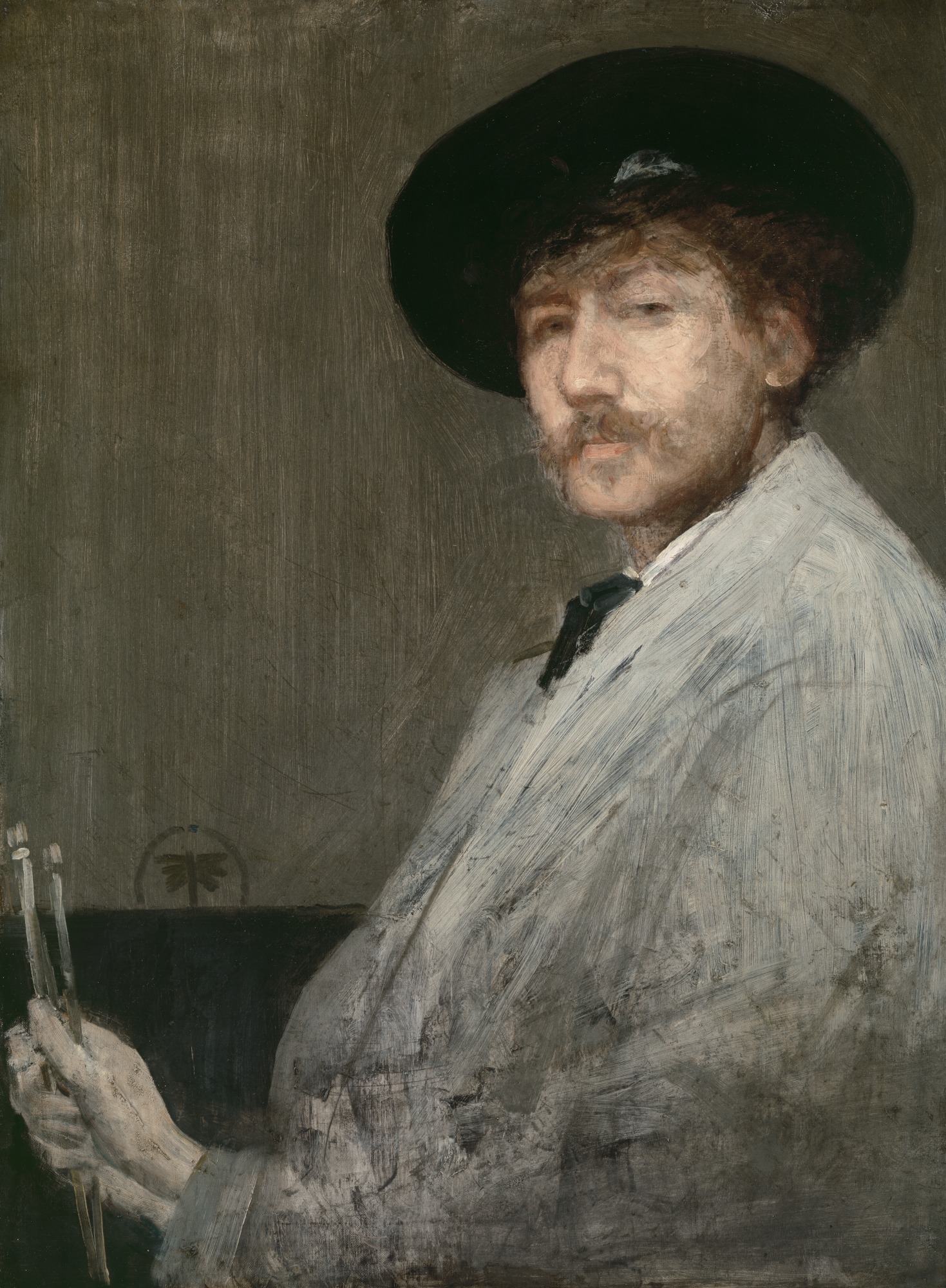
James McNeill Whistler (1834-1903) was an American-born painter and printmaker whose career was largely based in the United Kingdom. A leading figure of the Aesthetic Movement, Whistler championed the philosophy of 'art for art's sake,' rejecting sentimentality and moralizing in favor of formal qualities like color and composition. His signature butterfly symbol, a delicate emblem with a venomous sting, perfectly encapsulated his dual nature: a master of subtle harmonies and a notorious public provocateur. Whistler's innovative approach, drawing parallels between painting and music through titles like 'Arrangements' and 'Nocturnes,' profoundly influenced modern art. His most iconic work, 'Arrangement in Grey and Black No. 1,' popularly known as 'Whistler's Mother,' remains a touchstone of portraiture, simultaneously revered and parodied, cementing his legacy as a pivotal, if controversial, artist of the 19th century.
🎵 Origins & History
James Abbott McNeill Whistler was born in Lowell, Massachusetts, to George Washington Whistler, a railroad engineer, and Anna McNeill Whistler. His early life was marked by frequent travel due to his father's work, including a significant period in St. Petersburg, Russia, where he briefly studied at the Imperial Academy of Arts. After a short stint at West Point, Whistler definitively turned to art, embracing the burgeoning Realist movement and befriending artists like Gustave Courbet. He relocated to London, a city that would become his primary base for the rest of his life, though he maintained strong ties to the artistic circles of both Paris and his native America. His early works already hinted at his developing interest in tonal harmony and flattened perspectives, setting the stage for his later, more radical experiments.
⚙️ How It Works
Whistler's artistic method was deeply rooted in his belief in 'art for art's sake.' He approached painting not as a narrative or emotional vehicle, but as a formal arrangement of colors and lines, akin to musical composition. This is evident in his deliberate use of titles like 'Symphony,' 'Harmony,' 'Nocturne,' and 'Arrangement' for his paintings, emphasizing the primacy of visual and tonal relationships over subject matter. He favored a restrained palette, often employing subtle gradations of color to create atmospheric effects, particularly in his nocturnes of London's Thames River. His technique involved thin layers of paint, often applied with brushes and palette knives, allowing for a luminous quality and a sense of delicate texture. Whistler's meticulous attention to composition extended to the framing and hanging of his works, often designing frames and even the exhibition spaces to complement the artwork itself, a holistic approach to presentation that was revolutionary for its time.
📊 Key Facts & Numbers
Whistler's career spanned over five decades. His most famous painting, 'Arrangement in Grey and Black No. 1,' commonly known as 'Whistler's Mother,' remains a touchstone of portraiture. His exhibition history includes participation in the Royal Academy and the Paris Salon, though he often clashed with these institutions. The infamous libel trial against John Ruskin occurred in 1878, which he lost financially but arguably won in public opinion regarding artistic judgment, resulting in his bankruptcy, forcing him to sell many possessions. He was awarded an Officer of the Legion of Honour by France, a rare distinction for a non-French artist, and was also made an honorary member of the Royal Academy of Arts in Munich. Whistler died at the age of 69, leaving behind a legacy estimated to be worth millions in art and influence.
👥 Key People & Organizations
Whistler's life was a constellation of influential figures and institutions. His mother, Anna McNeill Whistler, was not only his subject but a constant source of support. His father, George Washington Whistler, a prominent railroad engineer, instilled in him a disciplined approach that, paradoxically, he often rebelled against. In London, he was associated with the Pre-Raphaelite Brotherhood and later the Aesthetic Movement, though he often maintained a critical distance. Key figures who championed or critiqued his work included art critic John Ruskin, whose scathing review of Whistler's painting 'Nocturne in Black and Gold – The Falling Rocket' led to the famous libel trial. He also influenced younger artists like William Merritt Chase and John Singer Sargent. Whistler attempted to steer British art towards more modern sensibilities.
🌍 Cultural Impact & Influence
Whistler's impact on art and culture was profound, extending far beyond his canvases. His unwavering commitment to 'art for art's sake' provided a crucial foundation for modernism, influencing generations of artists who sought to liberate art from didactic or moralizing constraints. His innovative use of color and composition, particularly in his nocturnes and arrangements, foreshadowed abstract art and significantly shaped the development of Impressionism and Post-Impressionism. The iconic status of 'Whistler's Mother' has made it a ubiquitous symbol of motherhood, endlessly reproduced and parodied in popular culture, from The Simpsons to advertising campaigns. His distinctive butterfly signature became a recognizable brand, symbolizing his unique artistic identity and his often-prickly public persona.
⚡ Current State & Latest Developments
In the contemporary art world, Whistler's works continue to command significant attention and value. Major museums worldwide, including the Metropolitan Museum of Art in New York, the Tate Modern in London, and the Musée d'Orsay in Paris, house his key pieces. Exhibitions dedicated to his work continue to draw substantial crowds and critical analysis. His printmaking, particularly his etchings of Venice and London, remains highly regarded for its technical mastery and atmospheric quality, continuing to influence contemporary printmakers. The ongoing scholarly debate about his place in art history, particularly regarding his influence on abstraction and his complex relationship with American and British art scenes, ensures his relevance in academic discourse and art criticism.
🤔 Controversies & Debates
Whistler was a figure of perpetual controversy. His most famous dispute was the libel case against John Ruskin, initiated after Ruskin's disparaging review of 'Nocturne in Black and Gold – The Falling Rocket.' Whistler sued for libel but was awarded only a farthing (a nominal sum), leading to his bankruptcy. This trial, however, became a landmark moment in the defense of artistic autonomy against critical judgment. His combative personality and public feuds often overshadowed his artistic achievements. Furthermore, his aesthetic philosophy, while influential, was sometimes criticized for being overly detached or elitist, particularly by those who believed art should serve a moral or social purpose. His relationship with his patrons was often strained, marked by his demanding nature and his insistence on artistic control, leading to numerous disputes throughout his career.
🔮 Future Outlook & Predictions
The future of Whistler's legacy appears secure, though the interpretation of his work will undoubtedly evolve. As art history continues to re-evaluate the canon, Whistler's position as a bridge between academic tradition and modernist innovation is likely to be further solidified. His influence on abstract art and color theory will remain a key area of study, potentially revealing deeper connections to contemporary artistic practices. The ongoing digitization of art archives and the accessibility of his works through online museum collections will allow for new forms of scholarship and public engagement. Future exhibitions may explore less-discussed aspects of his oeuvre, such as his interior design work or his contributions to printmaking, offering fresh perspectives on his multifaceted career. The enduring power of 'Whistler's Mother' suggests that his work will continue to resonate with the public, sparking new dialogues about art, identity, and cultural memory.
💡 Practical Applications
While Whistler's primary application was in fine art, his principles and aesthetic sensibilities h
Key Facts
- Category
- aesthetics
- Type
- topic