
Contents
Overview
A kidney transplant is a surgical procedure to replace a diseased or damaged kidney with a healthy one from a donor. This life-saving intervention is typically reserved for individuals suffering from end-stage kidney disease (ESRD), a condition where the kidneys have lost most or all of their ability to function. The process involves meticulous matching between donor and recipient to minimize the risk of rejection, a complex immunological battle. Transplants can originate from deceased donors, whose kidneys are allocated through strict national systems, or from living donors, who can be genetically related or unrelated to the recipient. The first successful human kidney transplant, performed in 1954, marked a monumental leap in medical history, earning surgeon Joseph Murray a Nobel Prize. In 2018 alone, nearly 96,000 kidney transplants were performed globally, with living donors contributing over a third of these vital organs, underscoring its critical role in modern medicine.
🎵 Origins & History
The genesis of kidney transplantation can be traced back to early, often unsuccessful, attempts in the late 19th and early 20th centuries. However, a breakthrough moment arrived in 1954. A surgical team, led by Dr. Joseph Murray, successfully transplanted a kidney from identical twins Ronald and Richard Herrick. This landmark achievement, facilitated by surgeon Dr. Hartwell Harrison for the donor, was groundbreaking because the identical genetic makeup eliminated the risk of immune rejection. Murray's pioneering work in immunosuppression, particularly with the drug azathioprine, later paved the way for transplants between non-identical individuals. His contributions earned him the Nobel Prize in Physiology or Medicine, solidifying kidney transplantation's place as a transformative medical procedure.
⚙️ How It Works
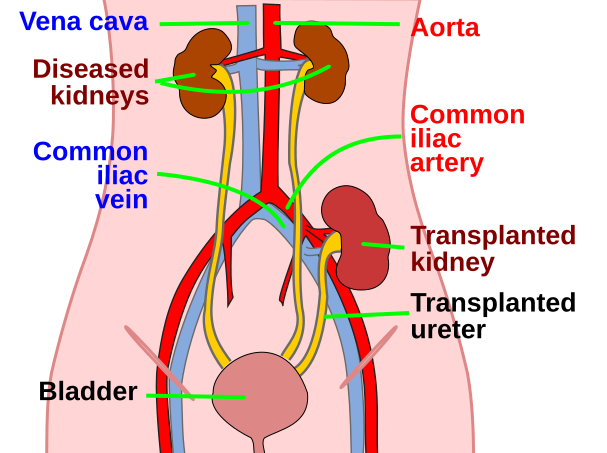
The intricate process of kidney transplantation begins with recipient evaluation, assessing suitability for surgery and lifelong immunosuppression. Donor kidneys are sourced from either deceased individuals, managed by organ procurement organizations like UNOS in the United States, or living donors, who undergo rigorous screening. Once a compatible kidney is identified, the recipient's diseased kidneys are typically left in place, and the donor kidney is surgically placed in the lower abdomen, with its artery and vein connected to the recipient's iliac vessels. Post-surgery, recipients must adhere to a strict regimen of immunosuppressant medications, such as tacrolimus and mycophenolate mofetil, to prevent their immune system from attacking the new organ. This delicate balance aims to suppress rejection without compromising the body's ability to fight infections.
📊 Key Facts & Numbers
Globally, kidney transplantation is a critical intervention for end-stage kidney disease (ESKD). The demand far outstrips supply; in the U.S. alone, the number of people living with kidney failure is substantial, and a significant number are on the national transplant waiting list, with the majority awaiting a kidney. The wait time for a deceased donor kidney can be lengthy, highlighting the urgent need for more organ donors. Survival rates are impressive, with one-year graft survival rates for deceased donor kidneys generally high and for living donor kidneys often exceeding 95%.
👥 Key People & Organizations
The landscape of kidney transplantation is shaped by pioneering surgeons, dedicated researchers, and vital organizations. Dr. Joseph Murray stands as a foundational figure in transplantation, recognized with a Nobel Prize for his work. Dr. Thomas Starzl, often called the father of liver transplantation, also made significant contributions to immunosuppression protocols that benefited kidney transplant recipients. Organizations like UNOS (United Network for Organ Sharing) in the U.S. manage the complex allocation system for deceased donor organs, ensuring fairness and equity. The National Kidney Foundation advocates for patients and promotes research, while institutions like Mayo Clinic and Cleveland Clinic are at the forefront of surgical innovation and patient care in transplantation.
🌍 Cultural Impact & Influence
Kidney transplantation has profoundly reshaped societal perceptions of organ donation and human resilience. It represents a powerful narrative of second chances, transforming lives previously defined by debilitating illness and dependence on dialysis. The act of living donation, in particular, embodies extraordinary altruism, fostering a unique bond between donor and recipient. Media portrayals, from documentaries to fictional dramas, often highlight the emotional and physical journey of transplant patients, raising public awareness and encouraging donation. The success of transplantation has also spurred advancements in immunology and genetics, influencing broader medical understanding of the body's complex defense mechanisms and the potential for biological repair.
⚡ Current State & Latest Developments
The field of kidney transplantation is in constant evolution, driven by advancements in surgical techniques, immunosuppressive therapies, and organ preservation. Innovations like machine perfusion, which keeps donor kidneys viable and functioning outside the body for extended periods, are improving organ quality and expanding the donor pool. Researchers are actively exploring xenotransplantation—using organs from other species, such as pigs—as a potential solution to the organ shortage, with recent breakthroughs involving genetically modified animals. Furthermore, the development of personalized immunosuppression strategies aims to tailor medication regimens to individual patients, reducing side effects and long-term complications. The ongoing quest for artificial kidneys and regenerative medicine also offers future alternatives.
🤔 Controversies & Debates
Significant ethical and practical debates surround kidney transplantation. The allocation of scarce donor organs remains a contentious issue, with ongoing discussions about prioritizing recipients based on medical urgency, likelihood of success, or social factors. The ethics of living donation, particularly non-directed or altruistic donation, raise questions about informed consent and potential coercion. Concerns also exist regarding the high cost of transplantation and lifelong immunosuppression, creating disparities in access to care. Furthermore, the potential for organ trafficking and the ethical implications of using genetically modified animal organs in xenotransplantation present complex challenges that require careful consideration and robust regulatory frameworks.
🔮 Future Outlook & Predictions
The future of kidney transplantation points towards increased efficiency, broader accessibility, and novel therapeutic approaches. Advances in 3D printing and tissue engineering hold promise for the creation of bioengineered kidneys, potentially eliminating the need for donor organs altogether. The refinement of CRISPR-Cas9 gene-editing technology could enable the creation of genetically modified organs for xenotransplantation that are less likely to be rejected by the human immune system. Personalized medicine, leveraging genomic sequencing and artificial intelligence, will likely lead to more precise immunosuppression protocols and better prediction of transplant outcomes. The ultimate goal is to move beyond transplantation as a salvage procedure towards a future where kidney failure can be prevented or effectively reversed.
💡 Practical Applications
Kidney transplantation is the definitive treatment for end-stage kidney disease (ESKD), offering patients a vastly improved quality of life and extended lifespan compared to long-term dialysis. It is a critical application of organ transplantation science, enabling individuals to resume normal activities, work, and travel without the constant burden of dialysis treatments. Beyond ESRD, transplant principles are applied to other organ failures, though kidney transplantation remains the most common solid organ transplant worldwide. The success of kidney transplants also informs research into other complex medical challenges, including autoimmune diseases and regenerative medicine, showcasing its broad impact on medical science.
Key Facts
- Category
- science
- Type
- topic