
Contents
Overview
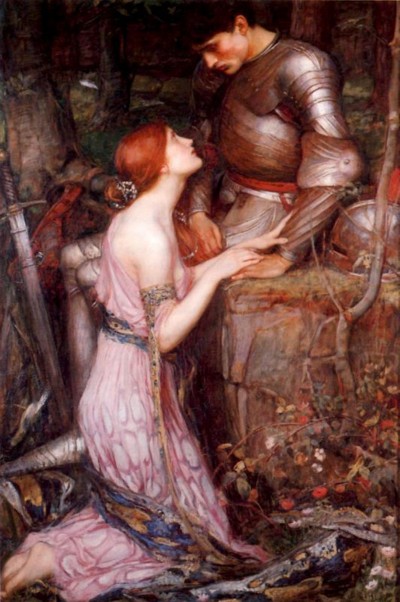
The seeds of medievalism were sown long before the term itself gained currency. As early as the 17th century, antiquarians like John Aubrey began to document and romanticize medieval ruins, sparking an early interest in the period's aesthetic and historical significance. The Enlightenment, with its focus on reason and classical antiquity, paradoxically fueled a counter-movement that found solace and inspiration in the perceived spiritual depth and heroic narratives of the Middle Ages. The Romantic era in the late 18th and early 19th centuries was a pivotal moment, with writers like Sir Walter Scott and poets like Samuel Taylor Coleridge popularizing medieval settings and themes. This period saw the emergence of the Gothic Revival in architecture, most notably in Britain with figures like Horace Walpole and his Strawberry Hill estate, and later in the grand designs of architects like A.W.N. Pugin for the Palace of Westminster. The mid-19th century witnessed the rise of the Pre-Raphaelite Brotherhood, who sought to return to the perceived purity and detail of art before the Renaissance, drawing heavily on medieval iconography and storytelling. The Arts and Crafts Movement, championed by William Morris, further embraced medieval ideals of craftsmanship and communal labor, rejecting industrialization in favor of handcrafted goods and designs.
⚙️ How It Works
Medievalism operates by selectively appropriating and reinterpreting elements from the historical Middle Ages. This process is not a direct replication but a conscious act of selection, often driven by contemporary needs and desires. Architects, for instance, might adopt the structural principles and decorative motifs of Gothic cathedrals like Notre-Dame de Paris to evoke grandeur, spirituality, or a sense of historical continuity, even if the original functional context is absent. In literature, medievalism manifests through the creation of fantasy worlds populated by knights, dragons, and quests, drawing on Arthurian legends and epic poetry like Beowulf to explore themes of heroism, morality, and the struggle between good and evil. The aesthetic dimension of medievalism involves a fascination with specific visual styles, such as illuminated manuscripts, heraldry, and the intricate metalwork found in artifacts from the Viking Age or the Merovingian Dynasty. Philosophically, it can involve a yearning for perceived medieval virtues like faith, loyalty, and a divinely ordered society, often in contrast to modern secularism or individualism. The 'how' of medievalism is thus about translation and adaptation, filtering a distant past through the lens of the present to create new meanings and experiences.
📊 Key Facts & Numbers
The global market for medieval-inspired goods and experiences is substantial, though difficult to quantify precisely. Architectural restorations and new constructions in Gothic Revival style continue to be commissioned, with projects like the St. Patrick's Cathedral in New York City representing multi-million dollar investments. The global sales of tabletop role-playing games, such as Dungeons & Dragons, which are heavily steeped in medieval fantasy tropes, exceed $1 billion annually. Furthermore, the tourism industry surrounding medieval castles and historical sites, like Carcassonne in France or Edinburgh Castle in Scotland, attracts millions of visitors each year, contributing significantly to local economies. These figures underscore the pervasive and economically significant presence of medievalism in contemporary society.
👥 Key People & Organizations
Key figures in the development and dissemination of medievalism span centuries and disciplines. Horace Walpole (1717-1797) is often credited with initiating the Gothic Revival in literature with his novel The Castle of Otranto (1764) and his architectural experiments at Strawberry Hill. Sir Walter Scott (1771-1832) profoundly shaped popular perceptions of the Middle Ages through his historical novels, such as Ivanhoe and The Talisman. In architecture, A.W.N. Pugin (1812-1852) was instrumental in establishing the Gothic Revival as a dominant style in Victorian Britain, notably through his work on the Palace of Westminster. The Pre-Raphaelite Brotherhood, founded by artists like Dante Gabriel Rossetti, John Everett Millais, and William Holman Hunt, sought artistic purity by emulating medieval styles. William Morris (1834-1896), a key figure in the Arts and Crafts Movement, championed medieval ideals of craftsmanship and design. Organizations like the Society for Medieval Archaeology and the Medieval Academy of America continue to promote scholarly research into the period, while fan communities and reenactment groups, though often informal, represent significant organizational forces in contemporary medievalism.
🌍 Cultural Impact & Influence
The cultural impact of medievalism is vast and multifaceted, permeating numerous aspects of modern life. Its most visible manifestation is in architecture, where Gothic Revival styles continue to inspire public buildings, churches, and even residential designs, evoking a sense of permanence and historical gravitas. In literature and film, medievalism is the bedrock of the fantasy genre, with countless novels, video games like The Witcher 3: Wild Hunt, and blockbuster movies like The Lord of the Rings trilogy drawing directly from medieval tropes and aesthetics. The ideals of chivalry, though often romanticized and simplified, continue to influence concepts of honor, courtly love, and heroic conduct in popular narratives. The aesthetic of medievalism has also filtered into fashion, graphic design, and even branding, with many companies adopting medieval-inspired logos or imagery to convey tradition, strength, or craftsmanship. Furthermore, medievalism has shaped historical consciousness, influencing how societies understand their past and construct national identities, often by selectively emphasizing or inventing medieval origins. The enduring popularity of medieval fairs and reenactments, such as the California Renaissance Faire, demonstrates a tangible desire among the public to experience a simulated medieval past.
⚡ Current State & Latest Developments
Contemporary medievalism is a dynamic and evolving field, constantly reinterpreting its source material. The rise of digital technologies has opened new avenues for medievalist expression, from hyper-realistic video games like Elden Ring that meticulously recreate medieval-inspired landscapes to online communities dedicated to medieval history and fantasy. The reenactment scene continues to grow, with increasing attention to historical accuracy and the development of specialized groups focusing on specific periods and regions, such as the late medieval period or early medieval Scandinavia. Academic scholarship on medievalism itself is also flourishing, with scholars analyzing its psychological underpinnings, its role in national identity formation, and its intersection with modern political ideologies. Neo-medievalism, a more recent term, often refers to contemporary attempts to revive or adapt medieval social and political structures, sometimes with
Key Facts
- Category
- culture
- Type
- topic