
Contents
Overview
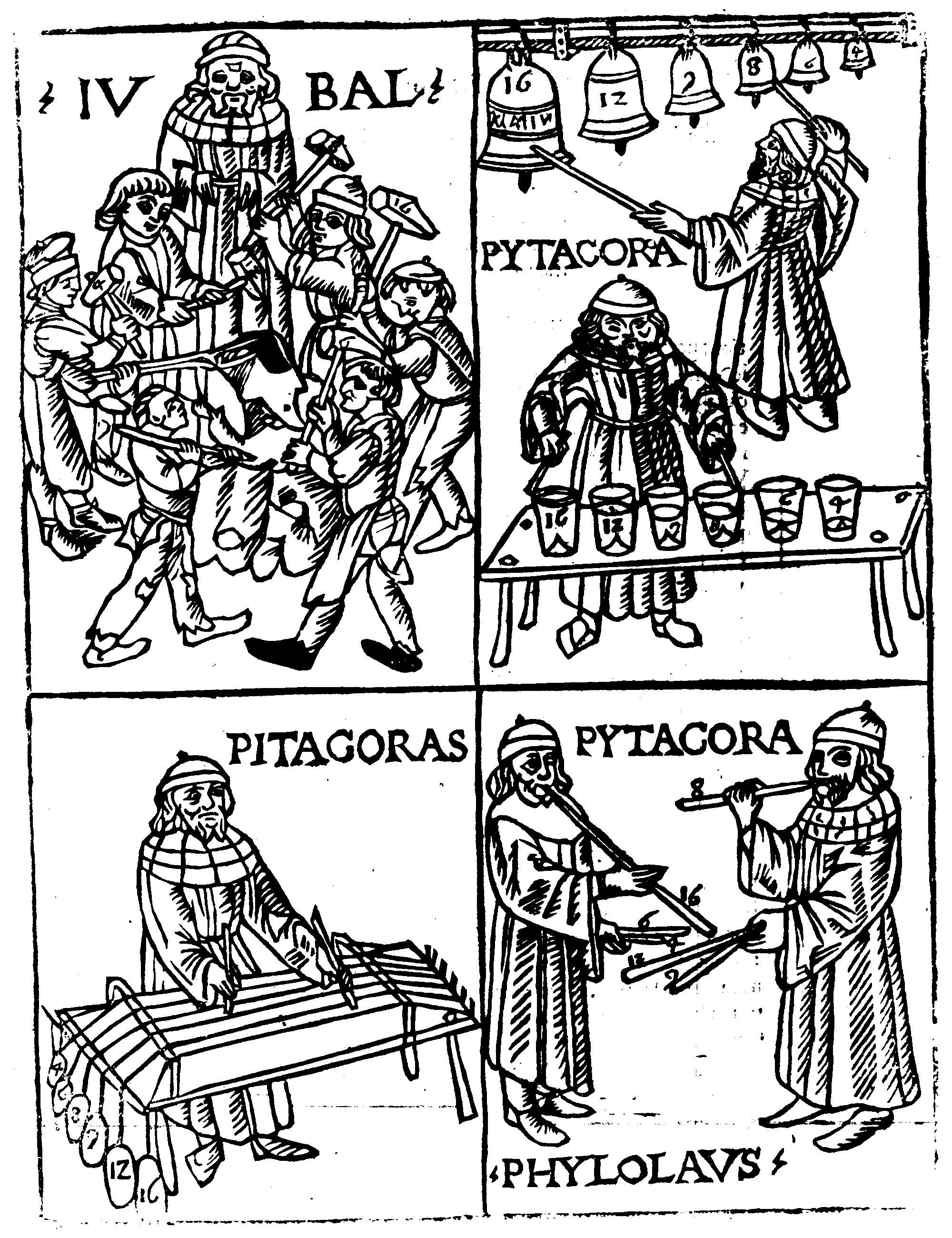
The lineage of music theory books stretches back to ancient Greece, with foundational texts like Boethius's De institutione musica (c. 500 AD) attempting to systematize the understanding of harmony and intervals based on Pythagorean principles. Medieval theorists, such as Guido of Arezzo, developed new notational systems and pedagogical methods, documented in works like his Micrologus (c. 1026). The Renaissance saw a flourishing of polyphony, leading to treatises on counterpoint by figures like Johannes Tinctoris and Palestrina's contemporaries. The Baroque era brought detailed explorations of figured bass and harmony, exemplified by Rameau's Traité de l'harmonie (1722), which proposed a hierarchical system of tonal relationships. Subsequent centuries witnessed the formalization of classical harmony, sonata form, and orchestration, with landmark works by Purcell, Beethoven's theorists, and later, figures like Schoenberg with his Theory of Harmony (1911).
⚙️ How They Work
Music theory books function by dissecting music into its constituent elements and explaining their relationships. They typically cover topics such as pitch (scales, modes, intervals, chords), rhythm (meter, tempo, duration), melody (contour, phrasing), harmony (tonality, atonality, voice leading), form (sonata, fugue, verse-chorus), and texture (monophony, polyphony, homophony). Advanced texts delve into orchestration, arranging, and specific compositional techniques like serialism or aleatoric music. Many books employ musical notation extensively, alongside analytical diagrams and exercises, to illustrate concepts and guide practice. The goal is to provide a systematic vocabulary and analytical framework for understanding how music is constructed and perceived, often drawing on historical examples from composers like Bach and Mozart.
📊 Key Facts & Numbers
The market for music theory books is valued at approximately $200 million USD worldwide, with North America and Europe accounting for nearly 70% of sales. Introductory harmony textbooks often sell upwards of 50,000 copies per edition, with some seminal works, like Walter Piston's Harmony, having sold over a million copies since its first publication in 1941. Online retailers like Amazon.com list over 100,000 titles related to music theory, and academic libraries worldwide hold millions of these volumes, with the Library of Congress alone housing over 50,000 such texts.
👥 Key People & Organizations
Key figures in the development of music theory literature include Pythagoras (ancient Greek intervals), Boethius (medieval systematization), Guido of Arezzo (notation and pedagogy), Jean-Philippe Rameau (tonal theory), Henry Purcell (early English harmony), Arnold Schoenberg (atonality and twelve-tone technique), Igor Stravinsky (rhythm and dissonance), and Olivier Messiaen (modes of limited transposition). Organizations like the American Musicological Society and the Royal Musical Association publish journals that feature theoretical research, while publishers such as G. Schirmer and W. W. Norton & Company are renowned for their extensive catalogs of music theory texts. Berklee College of Music and The Juilliard School are institutions whose curricula heavily rely on and contribute to this body of literature.
🌍 Cultural Impact & Influence
Music theory books have profoundly shaped Western musical practice and education, establishing a common language and analytical framework for centuries of composers and performers. They have been instrumental in the development of formal music education in conservatories and universities worldwide, influencing pedagogical methods from elementary school music classes to advanced doctoral seminars. The dissemination of theoretical knowledge through these books has enabled the replication and evolution of musical styles, from the intricate counterpoint of J.S. Bach to the complex harmonic language of Richard Wagner and the avant-garde explorations of Karlheinz Stockhausen. Their influence extends beyond classical music, impacting jazz improvisation, film scoring, and even the structural understanding of popular music genres like rock and pop.
⚡ Current State & Latest Developments
The current landscape of music theory books is characterized by a growing diversity of approaches and a significant digital presence. While traditional print textbooks remain prevalent, e-books, interactive online courses, and video tutorials are increasingly supplementing or replacing them. There's a notable trend towards incorporating music from non-Western traditions, jazz, and popular music into curricula, challenging the historical dominance of European classical music theory. New editions of classic texts are updated to reflect contemporary scholarship, and emerging areas like computational musicology and music information retrieval are spawning entirely new categories of theoretical literature. Publishers are experimenting with multimedia integration, offering audio examples and interactive exercises directly within digital texts.
🤔 Controversies & Debates
A controversy surrounds the Eurocentric bias inherent in much traditional music theory literature. Critics argue that by focusing predominantly on Western classical music, these books often marginalize or ignore the rich theoretical frameworks and musical practices of other cultures, such as Indian classical music's ragas or Middle Eastern maqams. The applicability of Western concepts like functional harmony and diatonic scales to genres like blues or hip-hop is also debated, with some scholars advocating for more context-specific analytical tools. Furthermore, the pedagogical effectiveness of rote memorization of theoretical rules versus a more intuitive, practice-based approach remains a perennial point of contention among educators and theorists.
🔮 Future Outlook & Predictions
The future of music theory books will likely see a continued integration with digital technologies, moving beyond static text to dynamic, interactive learning platforms. Expect more AI-driven personalized learning paths, adaptive exercises, and real-time feedback systems. There will be an increased emphasis on cross-cultural music theory, with more comprehensive coverage of global musical systems and their theoretical underpinnings. As music production becomes more accessible through software like Ableton Live and Logic Pro, theory books may increasingly focus on the theoretical aspects of electronic music production, sound design, and algorithmic composition. The very definition of 'theory' may expand to encompass the practical, embodied knowledge of musicians across all genres.
💡 Practical Applications
Music theory books are indispensable for practical musical application. For composers, they provide tools for developing new ideas, structuring works, and understanding harmonic and melodic possibilities, whether composing a symphony or a film score. Performers use them to analyze scores, understand harmonic progressions, and interpret musical intent, crucial for genres ranging from Baroque to jazz fusion. Educators rely on them to structure curricula, teach fundamental concepts like key signatures and time signatures, and train students in analysis and composition. Musicologists use them as a basis for historical and analytical research, examining the theoretical underpinnings of various musical eras and styles, from Gregorian chant to contemporary electronic music.
Key Facts
- Category
- culture
- Type
- topic