
Contents
- ⚛️ Who is Niels Bohr?
- 💡 The Bohr Model: A Quantum Leap
- 🤝 Bohr's Influence & The Copenhagen Interpretation
- 🔬 Beyond the Atom: Bohr's Later Work
- 🌍 Bohr's Role in Global Affairs
- 🤔 The Bohr-Einstein Debates: A Clash of Titans
- 🏆 Awards & Recognition
- 📚 Where to Learn More About Bohr
- Frequently Asked Questions
- Related Topics
Overview
Niels Bohr (1885-1962) was a Danish physicist whose foundational work on atomic structure and quantum theory fundamentally reshaped our understanding of reality. His 1913 model of the atom, proposing electrons orbit the nucleus in specific energy levels, was a revolutionary leap, directly addressing the instability issues of Rutherford's earlier model. Bohr's later development of the Copenhagen interpretation of quantum mechanics, co-authored with Werner Heisenberg, introduced concepts like complementarity and the observer effect, asserting that particles can exist in multiple states until measured. This radical departure from classical physics, while immensely successful, also sparked decades of debate, most famously with Albert Einstein, who famously quipped, 'God does not play dice.' Bohr's influence extends beyond theoretical physics; he was a key figure in the Manhattan Project and a lifelong advocate for nuclear disarmament and international scientific cooperation.
⚛️ Who is Niels Bohr?
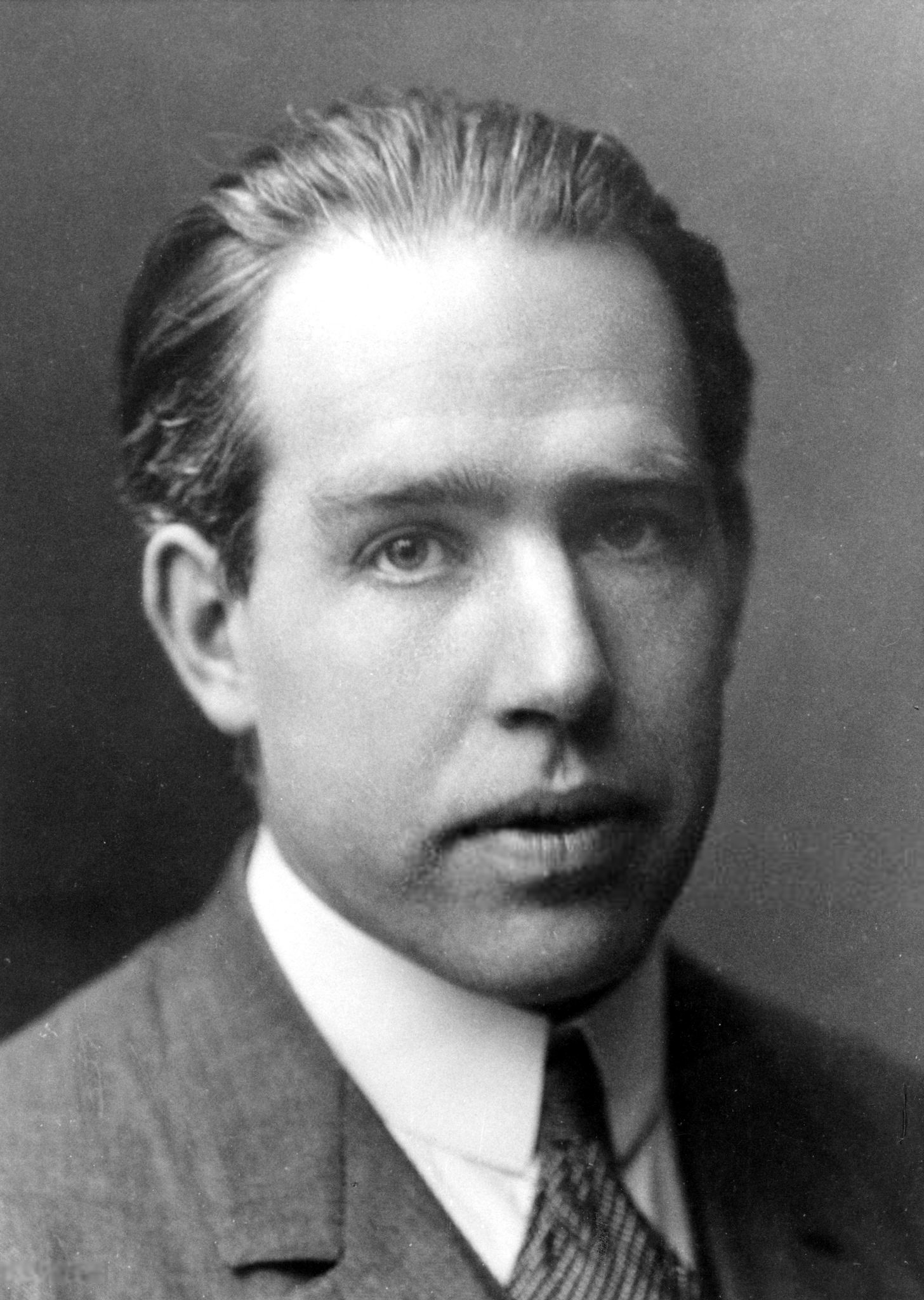
Niels Bohr (1885-1962) was a Danish physicist whose foundational contributions to understanding atomic structure and quantum theory earned him the Nobel Prize in 1922. He's not just a historical figure; he's a cornerstone of modern physics, a man whose ideas fundamentally reshaped our perception of reality at its smallest scales. Think of him as the architect of the quantum world, meticulously designing the blueprints for how atoms behave. His work is essential for anyone interested in the fundamental nature of matter, energy, and the universe itself, impacting fields from solid-state physics to quantum computing.
💡 The Bohr Model: A Quantum Leap
Bohr's most celebrated achievement is the Bohr model, proposed in 1913. This wasn't just an incremental improvement; it was a radical departure from classical physics. He posited that electrons orbit the nucleus in specific, quantized energy levels, and that they can jump between these levels by absorbing or emitting discrete amounts of energy (photons). This model, though later refined, successfully explained the spectral lines of hydrogen and laid the groundwork for understanding atomic stability and chemical bonding. It was a pivotal moment, bridging the gap between classical and quantum mechanics.
🤝 Bohr's Influence & The Copenhagen Interpretation
Beyond the atom's structure, Bohr was a central figure in developing the Copenhagen interpretation of quantum mechanics, a philosophical framework that dominated quantum thought for decades. This interpretation, co-developed with physicists like Max Born and Werner Heisenberg, emphasizes the probabilistic nature of quantum events and the role of observation in collapsing quantum states. It suggests that particles don't have definite properties until measured, a concept that continues to spark debate and philosophical inquiry into the nature of reality and measurement.
🔬 Beyond the Atom: Bohr's Later Work
While his early work focused on the atom, Bohr's intellectual curiosity extended far beyond. During and after World War II, he became deeply involved in the implications of nuclear physics, particularly the development of the atomic bomb. He also explored the concept of complementarity, suggesting that certain properties of quantum systems can only be understood in relation to each other, not simultaneously. This philosophical extension of his quantum ideas touched upon biology and even epistemology, demonstrating a mind constantly seeking deeper connections.
🌍 Bohr's Role in Global Affairs
Bohr's influence wasn't confined to the laboratory. He was a passionate advocate for open science and international cooperation, particularly in the post-war era. He famously met with President Roosevelt in 1939 to discuss the potential for nuclear weapons, and later championed the idea of a peaceful, open world in the face of the burgeoning Cold War. His efforts to foster dialogue and understanding between nations, even those with opposing ideologies, highlight a profound sense of global responsibility that transcended his scientific pursuits.
🤔 The Bohr-Einstein Debates: A Clash of Titans
Perhaps the most famous intellectual sparring partner Bohr had was Albert Einstein. Their legendary debates, particularly at the Solvay Conferences, challenged the very foundations of quantum mechanics. Einstein, a staunch believer in a deterministic universe, famously quipped, "God does not play dice." Bohr, the champion of quantum indeterminacy, countered with the idea that quantum mechanics was a complete description of reality, even if it meant embracing inherent randomness. These exchanges, documented from the 1927 Solvay Conference onwards, are crucial for understanding the philosophical evolution of quantum physics.
🏆 Awards & Recognition
Bohr's groundbreaking work garnered him immense recognition. He was awarded the Nobel Prize in 1922 for his "investigation of the structure of atoms and of the radiation emanating therefrom." Beyond the Nobel, he received numerous other accolades, including the Dannie Heineman Prize and the Atoms for Peace Award. His legacy is cemented not just by these awards, but by the enduring impact of his theories on virtually every branch of modern science and technology.
📚 Where to Learn More About Bohr
To truly grasp Bohr's genius, exploring his original writings and biographies is key. The Bohr family home in Copenhagen, now the Niels Bohr Institute, offers a tangible connection to his life and work. For a deeper dive, consider reading his seminal papers or biographies like "Niels Bohr: His Life and Work as Seen by His Contemporaries." Understanding his philosophical essays, such as "Causality and Complementarity", provides insight into his broader intellectual scope. Engaging with these resources will illuminate the profound impact of one of history's most influential scientific minds.
Key Facts
- Year
- 1885
- Origin
- Copenhagen, Denmark
- Category
- Physics & Philosophy
- Type
- Person
Frequently Asked Questions
What is the Bohr model of the atom?
The Bohr model, proposed in 1913, describes the atom as having a central nucleus with electrons orbiting it in specific, fixed energy levels. Electrons can jump between these levels by absorbing or emitting discrete packets of energy, known as photons. This model was a crucial step in developing quantum mechanics and explained phenomena like the spectral lines of hydrogen, though it was later superseded by more complex quantum mechanical models.
What is the Copenhagen interpretation?
The Copenhagen interpretation is a collection of views on quantum mechanics developed by Niels Bohr and Werner Heisenberg. It posits that quantum systems exist in a superposition of states until measured, at which point the wave function collapses into a single definite state. It emphasizes the probabilistic nature of quantum events and the observer's role in the measurement process, a concept that has led to significant philosophical debate.
What was the Bohr-Einstein debate about?
The Bohr-Einstein debates, particularly prominent at the Solvay Conferences, centered on the interpretation of quantum mechanics. Einstein, uncomfortable with the inherent randomness, sought a more deterministic underlying reality, famously stating 'God does not play dice.' Bohr defended the completeness and probabilistic nature of quantum mechanics, arguing that it accurately described reality as we could observe it, even if it meant embracing indeterminacy.
What is complementarity?
Complementarity is a concept introduced by Niels Bohr, suggesting that certain pairs of physical properties, like a particle's wave and particle nature, are complementary. They cannot be observed or measured simultaneously with full precision, yet both are necessary for a complete understanding of the phenomenon. This principle extends beyond physics, influencing Bohr's thoughts on biology and philosophy.
Did Niels Bohr work on the atomic bomb?
Yes, Niels Bohr was deeply concerned with the implications of nuclear physics. While he did not directly work on the Manhattan Project in the United States, he met with President Roosevelt to discuss the potential for nuclear weapons and later advocated for international control and peaceful uses of atomic energy. His insights into nuclear fission were crucial, and he was a prominent voice on the ethical and political ramifications of nuclear technology.