
Contents
- 🎵 Origins & History
- ⚙️ How It Worked: Unification and Governance
- 📊 Key Facts & Numbers
- 👥 Key People & Organizations
- 🌍 Cultural Impact & Influence
- ⚡ Current State & Latest Developments
- 🤔 Controversies & Debates
- 🔮 Future Outlook & Predictions
- 💡 Practical Applications
- 📚 Related Topics & Deeper Reading
- References
Overview
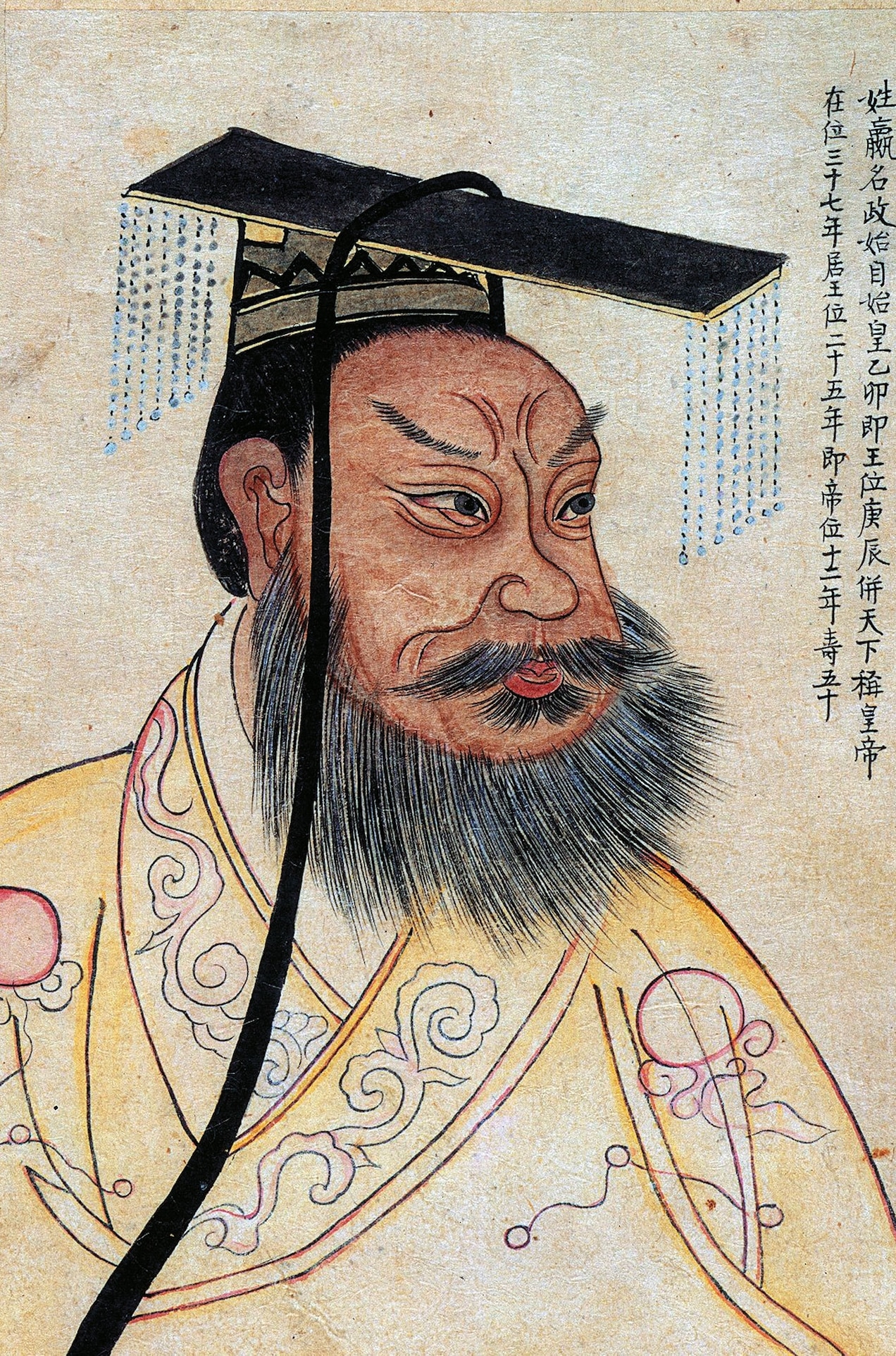
Qin Shi Huang (259–210 BC) was the formidable founder of the Qin dynasty and the inaugural emperor of a unified China. Born Ying Zheng, he ascended the throne of the state of Qin and, through relentless military campaigns, conquered the other Warring States, bringing an end to centuries of division. He then forged the title of 'Emperor' (Huángdì), a designation that would echo through Chinese history for over two millennia. His reign was marked by sweeping reforms, including the standardization of weights, measures, currency, and script, alongside monumental construction projects like the precursor to the Great Wall and his own colossal mausoleum guarded by the Terracotta Army. Despite his achievements in unification and state-building, his rule was also characterized by authoritarianism, book burning, and the persecution of scholars, leaving a complex and enduring legacy.
🎵 Origins & History
Born Ying Zheng in Handan, the capital of the state of Zhao, his early life was shaped by the tumultuous Warring States period. His father, King Zhuangxiang of Qin, was a hostage in Zhao, and his mother, Lady Zhao, was a former concubine of the wealthy merchant Lü Buwei, who is widely believed to have been Ying Zheng's biological father. Lü Buwei's influence was instrumental in Ying Zheng's succession to the throne of Qin. Initially ruling as King Zheng of Qin, he spent years consolidating power and meticulously planning his conquest of the rival states. By 221 BC, his armies had achieved victory over all six other major states—Han, Zhao, Wei, Chu, Yan, and Qi—culminating in his proclamation as Qin Shi Huang, the First Emperor of China.
⚙️ How It Worked: Unification and Governance
Qin Shi Huang's reign was defined by a ruthless pursuit of centralized control and standardization. He dismantled the feudal system, replacing it with a bureaucratic structure directly accountable to him, divided the empire into 36 (later 40) commanderies, and appointed officials based on merit rather than birthright. His most impactful reforms included the standardization of the written script (Small Seal Script), currency, weights, and measures, which facilitated trade and communication across the vast empire. He also initiated massive infrastructure projects, most notably the linking and extension of existing fortifications to create the first iteration of the Great Wall of China, intended to defend against nomadic incursions from the north, and the construction of an extensive network of roads and canals. His legalist philosophy dictated a strict adherence to law and order, with harsh punishments for transgressions.
📊 Key Facts & Numbers
The unification under Qin Shi Huang was a monumental feat, ending over 250 years of division. The Terracotta Army, discovered in 1974, comprises over 8,000 life-sized figures, each with unique facial features, along with chariots and horses, buried to guard the emperor's tomb. The construction of the Great Wall, initiated by Qin Shi Huang, eventually stretched for thousands of miles, though the sections built under his rule were primarily rammed earth and significantly different from the stone structures seen today. His reign saw the standardization of the Chinese currency, with the round copper coin with a square hole becoming the standard for centuries, and the establishment of a unified legal code that influenced subsequent dynasties.
👥 Key People & Organizations
Key figures surrounding Qin Shi Huang include his powerful chancellor, Lü Buwei, who played a crucial role in his early ascent and governance, and the Legalist philosopher Li Si, who served as his chief advisor and architect of many of his administrative reforms. His generals, such as Wang Jian, were instrumental in the military campaigns that unified China. After his death, his second son, Qin Er Shi, ascended the throne, largely controlled by the powerful eunuch Zhao Gao, leading to the rapid collapse of the Qin dynasty within four years. The historian Sima Qian, writing over a century later in the Han Dynasty, provided much of the historical record, albeit with a critical perspective, in his Records of the Grand Historian.
🌍 Cultural Impact & Influence
Qin Shi Huang's legacy is profound and multifaceted, deeply embedding the concept of a unified China into the national consciousness. The title 'Emperor' (Huángdì) he created became synonymous with Chinese monarchy for over two millennia, adopted by subsequent dynasties like the Han Dynasty, Tang Dynasty, and Qing Dynasty. His administrative and legalist reforms laid the groundwork for imperial governance, influencing political structures across East Asia. The Great Wall, though significantly rebuilt and expanded over centuries, remains an enduring symbol of China. The discovery of the Terracotta Army in 1974 revitalized global interest in his reign, becoming a major tourist attraction and a testament to the Qin's organizational and artistic capabilities. However, his authoritarian methods and suppression of dissent, particularly the infamous burning of books and burying of scholars, cast a long shadow, sparking debates about the cost of unification.
⚡ Current State & Latest Developments
The ongoing excavation and study of Qin Shi Huang's mausoleum continue to reveal new insights into the Qin era. Archaeological efforts in Xi'an, where the mausoleum is located, are constantly uncovering more artifacts and details about the empire's technological and artistic achievements. Modern historians and archaeologists use advanced techniques to analyze the construction methods of the Terracotta Army and the tomb itself, seeking to understand the logistics and engineering prowess of the Qin. Furthermore, comparative historical studies frequently revisit Qin Shi Huang's reign to draw parallels with modern state-building efforts and the challenges of maintaining national unity and implementing sweeping reforms. The enduring fascination with his rule ensures continued academic and public interest.
🤔 Controversies & Debates
The most significant controversy surrounding Qin Shi Huang centers on his brutal authoritarianism and the immense human cost of his projects. His strict adherence to Legalist principles, which emphasized harsh punishments and absolute state control, led to widespread fear and resentment. The burning of books and burying of scholars, aimed at suppressing dissenting thought and consolidating ideological control, is a particularly notorious event, criticized for its destruction of intellectual heritage. Debates persist regarding the exact number of laborers conscripted for his massive construction projects, with estimates ranging from hundreds of thousands to over a million, many of whom are believed to have perished. His legacy is thus a constant negotiation between the achievements of unification and the methods employed.
🔮 Future Outlook & Predictions
The future outlook for understanding Qin Shi Huang is tied to ongoing archaeological discoveries and evolving historical interpretations. As technology advances, new methods will likely be employed to explore the vast, largely unexcavated mausoleum, potentially revealing more about his life, beliefs, and the extent of his empire. Comparative studies may continue to draw lessons from his reign regarding the balance between strong central governance and individual freedoms, particularly in the context of global political trends. There is also potential for new interpretations of his reign to emerge from archaeological finds that challenge or refine existing narratives, particularly concerning his interactions with neighboring cultures and his long-term impact on the development of Chinese identity.
💡 Practical Applications
While Qin Shi Huang himself is a historical figure, his actions and policies have had enduring practical applications. The standardization of weights, measures, currency, and script directly facilitated trade and economic integration, principles that remain fundamental to modern economies. The concept of a unified, centralized state, which he pioneered, continues to be the dominant model for governance in China and many other nations. His infrastructure projects, particularly the precursor to the Great Wall and the extensive road network, demonstrated the power of large-scale public works to connect and control a territory, a strategy still employed in modern infrastructure development. The administrative divisions he created also influenced the territorial organization of subsequent Chinese dynasties.
Key Facts
- Category
- history
- Type
- topic