
Contents
Overview
The conceptual seeds of RBAC were sown in the early days of computing, but its formalization as a distinct access control model began to take shape in the late 1980s and early 1990s. Early systems often relied on individual user permissions, a model that quickly became unmanageable as organizations grew. RBAC is widely adopted across enterprises and government agencies. It provides a structured, scalable, and auditable method for enforcing security policies, distinguishing itself from older models like DAC and MAC models.
⚙️ How It Works
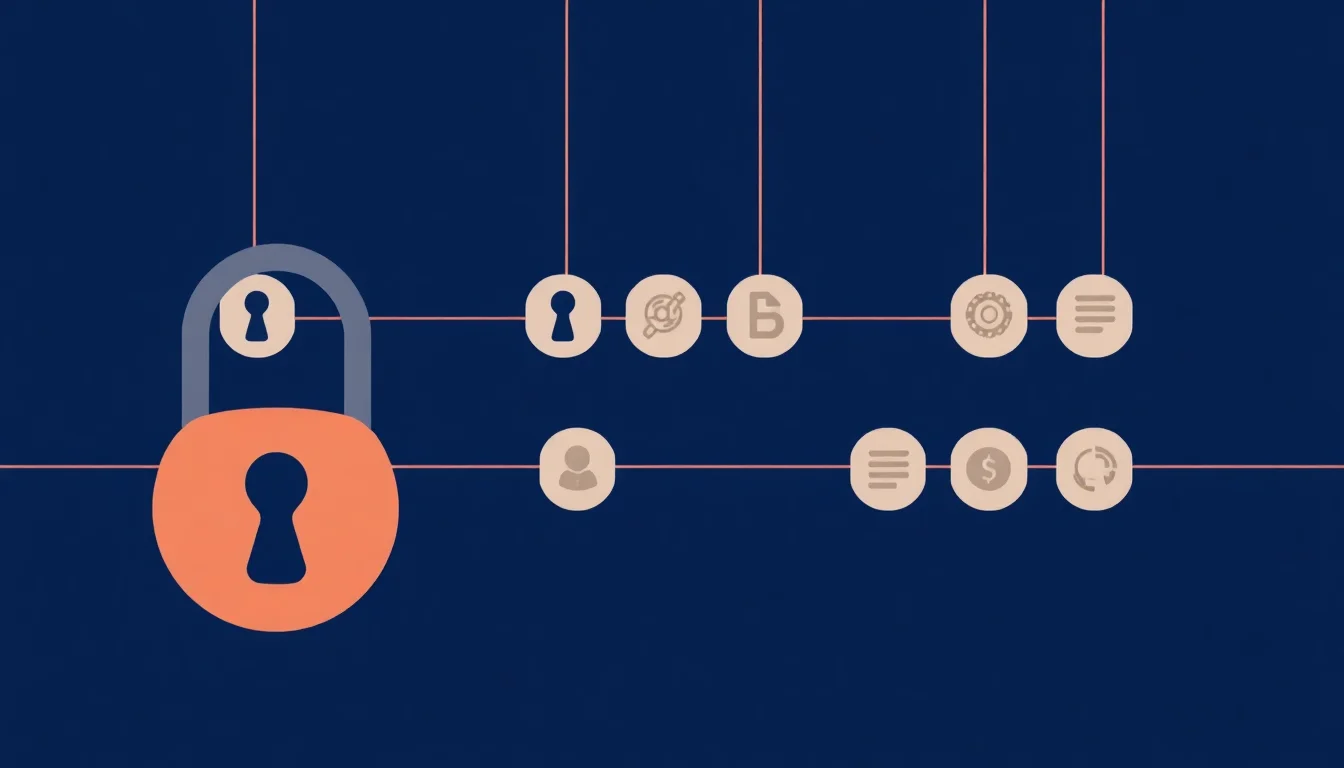
At its core, RBAC operates on a simple yet powerful principle: abstracting permissions away from individual users and associating them with job functions or roles. An administrator first defines a set of roles (e.g., 'Accountant', 'Sales Manager', 'System Administrator'). Then, specific permissions (e.g., 'read financial reports', 'approve expense claims', 'reset user passwords') are granted to these roles. Finally, individual users are assigned to one or more roles based on their responsibilities within the organization. For instance, a user in the 'Accountant' role would automatically inherit all permissions assigned to that role, such as viewing and editing financial records, without those permissions being explicitly granted to the user account itself. This model supports separation of duties and simplifies the onboarding and offboarding of employees, as only their role assignments need to be adjusted, not individual permission lists.
📊 Key Facts & Numbers
RBAC is not just a theoretical construct; its impact is quantifiable. RBAC is widely adopted across enterprises and government agencies, simplifying access management in complex environments. It provides a structured, scalable, and auditable method for enforcing security policies. Cloud-native RBAC is becoming the default for managing access to distributed resources. The integration of AI and machine learning is beginning to automate role discovery and permission assignment, aiming to reduce the administrative burden and potential for human error.
👥 Key People & Organizations
The architects of RBAC include David Ferraiolo, D. R. Kuhn, and Ramesh Narayan, whose 1996 paper provided the foundational framework. Beyond these pioneers, organizations like the National Institute of Standards and Technology (NIST) have been instrumental in promoting RBAC standards and best practices, particularly through their work on Computer Security Resource Center (CSRC) publications. Major technology vendors have integrated RBAC into their product suites; Microsoft's Active Directory and Oracle's Identity Management solutions are prominent examples. Cloud providers like AWS (with AWS IAM) and Google Cloud Platform (with Google Cloud IAM) have built extensive RBAC capabilities to manage access to their services. The International Organization for Standardization (ISO) also plays a role through standards like ISO/IEC 27001, which implicitly or explicitly endorse RBAC principles.
🌍 Cultural Impact & Influence
RBAC has fundamentally reshaped how digital access is managed, moving from a user-centric to a role-centric paradigm. Its influence is pervasive, underpinning the security of countless applications and systems, from corporate intranets to government databases. RBAC has made it easier to implement compliance with regulations like GDPR and HIPAA, which mandate strict controls over sensitive data. Culturally, RBAC has fostered a more structured approach to security, emphasizing the principle of least privilege – users should only have the access necessary to perform their job functions. This has trickled down into user expectations, with many now understanding that their access is tied to their role within an organization rather than being a universal right. The concept has also inspired related models, such as Attribute-Based Access Control (ABAC), which offers even finer-grained control.
⚡ Current State & Latest Developments
In 2024 and beyond, RBAC continues to evolve, driven by the complexities of modern IT environments. Cloud-native RBAC, as seen in AWS IAM and Microsoft Azure AD, is becoming the default for managing access to distributed resources. Furthermore, the integration of AI and machine learning is beginning to automate role discovery and permission assignment, aiming to reduce the administrative burden and potential for human error. Companies like Braintrust are developing AI-powered observability platforms that can help identify anomalous access patterns, indirectly supporting RBAC enforcement.
🤔 Controversies & Debates
Despite its widespread adoption, RBAC is not without its critics and challenges. One significant debate revolves around the "role explosion" problem, where the number of roles can become unmanageably large in complex organizations, negating some of the initial benefits of simplification. Another point of contention is the granularity of control; while RBAC is more flexible than older models, it can sometimes struggle with highly specific or temporary access requirements, leading to workarounds that compromise security. The management of role hierarchies and the potential for privilege creep (where users accumulate more permissions than they need over time) remain ongoing concerns. Critics also point out that RBAC, by itself, doesn't inherently enforce the principle of least privilege; it requires careful design and ongoing auditing to achieve this. The debate between RBAC and more granular models like ABAC continues, with each having its own strengths and weaknesses depending on the use case.
🔮 Future Outlook & Predictions
The future of RBAC is likely to be characterized by increased automation and integration with other security paradigms. Expect to see more sophisticated role mining tools that use AI to analyze user activity and suggest optimal role definitions, mitigating the "role explosion" issue. The convergence of RBAC with Zero Trust principles will lead to more dynamic access policies that adapt to changing risk factors in real-time. Furthermore, as organizations increasingly adopt decentralized identity solutions, RBAC may evolve to manage access across federated systems more seamlessly. The development of standardized RBAC m
💡 Practical Applications
RBAC is a cornerstone of modern access management, enabling organizations to control who can access what resources. It is particularly crucial in environments with a large number of users and resources, such as large enterprises and government agencies. RBAC is widely adopted across enterprises and government agencies, simplifying access management in complex environments. It provides a structured, scalable, and auditable method for enforcing security policies. RBAC has made it easier to implement compliance with regulations like GDPR and HIPAA, which mandate strict controls over sensitive data. RBAC emphasizes the principle of least privilege – users should only have the access necessary to perform their job functions. Attribute-Based Access Control (ABAC) is a related model inspired by RBAC.
Key Facts
- Category
- technology
- Type
- topic