
Contents
Overview
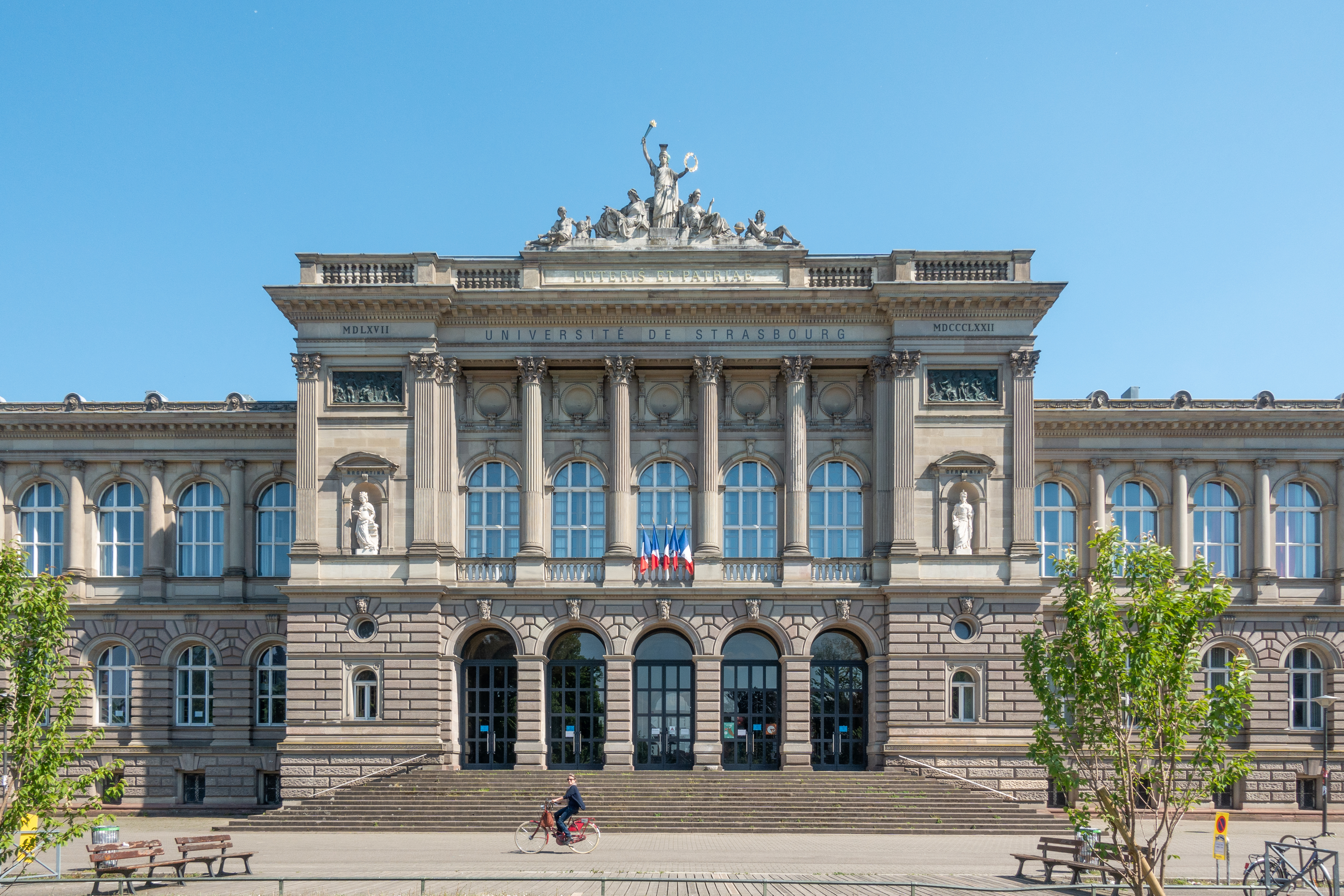
The University of Strasbourg (Unistra) stands as a monumental institution in French higher education, boasting a rich lineage stretching back to the 16th century. With over 52,000 students and 3,300 researchers, it is a powerhouse of academic and scientific discovery, housing 35 faculties, schools, and institutes across six campuses. Its history is deeply intertwined with the tumultuous political landscape of Alsace, having been founded by Johannes Sturm in 1538, later becoming a Protestant academy, then a German imperial university, and finally a French public research university. This storied past has produced a remarkable roster of alumni and faculty, including Nobel laureates, two Fields Medalists, and luminaries such as Louis Pasteur, Marc Bloch, and Johann Wolfgang von Goethe. Today, Unistra continues its legacy as a leading multidisciplinary research university, contributing significantly to fields ranging from medicine and chemistry to humanities and law.
🎵 Origins & History
The University of Strasbourg's origins trace back to the 16th century. Its trajectory was profoundly shaped by the shifting political tides of Alsace; it was founded by Johannes Sturm as a Protestant academy, later becoming a university, then a German imperial university, and finally a French public research university. The modern iteration emerged from a reorganization in the 1970s, culminating in the consolidation of three distinct institutions into the current University of Strasbourg in 2009. This complex history, marked by periods under German and French rule, has imbued Unistra with a unique bicultural identity and a resilience forged through centuries of change, mirroring the very evolution of European scholarship.
⚙️ How It Works
The University of Strasbourg operates as a comprehensive public research university, structured into 35 distinct academic units including faculties, schools, and specialized institutes. These units are spread across six main campuses, with the historic Neustadt district housing significant facilities. The university's research endeavors are organized through 71 dedicated laboratories, fostering interdisciplinary collaboration across its broad spectrum of disciplines. Its academic offerings span a vast array of fields, from the natural sciences and engineering to the humanities, social sciences, and health sciences, catering to a diverse student body. The governance structure ensures a balance between centralized administration and the autonomy of its constituent schools and research centers, facilitating both broad strategic direction and specialized academic pursuit.
📊 Key Facts & Numbers
Unistra is a colossal academic entity, enrolling over 52,000 students, with approximately 16,000 pursuing master's degrees and over 10,000 engaged in doctoral studies. The university employs a substantial workforce of over 5,700 individuals, including more than 3,300 researchers actively pushing the boundaries of knowledge. Its annual budget reportedly exceeds €500 million, underscoring its significant economic and academic scale within France and Europe. The university offers more than 700 different degree programs, reflecting its extensive academic portfolio. Its research output is substantial, with thousands of scientific publications generated annually, contributing to France's global standing in scientific research and innovation.
👥 Key People & Organizations
The University of Strasbourg's intellectual legacy is deeply connected to a constellation of influential figures. Johannes Sturm, its founder, laid the groundwork for its humanistic tradition. Later, Johann Wolfgang von Goethe, the celebrated German writer, studied law there in the late 18th century. The renowned chemist and microbiologist Louis Pasteur was born in Strasbourg and later conducted foundational research that would impact medicine globally. Historian Marc Bloch taught at the university. Statesman Robert Schuman, one of the principal architects of what would become the European Union, also had ties to the university. The institution itself is a key part of the Site Universitaire Alsacien, a collaborative network of higher education institutions in the region.
🌍 Cultural Impact & Influence
The University of Strasbourg's influence extends far beyond its campus gates, permeating European intellectual and political thought. Its historical role as a bridge between French and German academic traditions has fostered a unique environment for cross-cultural scholarship. The sheer number of Nobel laureates associated with Unistra—reportedly 18 in total—attests to its profound impact on scientific advancement, particularly in fields like chemistry and medicine. The work of its alumni, such as Robert Schuman in forging European unity, has had tangible geopolitical consequences. Furthermore, the university's contributions to the Annales School of history have fundamentally reshaped historical methodology worldwide, emphasizing social and economic structures over traditional political narratives.
⚡ Current State & Latest Developments
In the contemporary academic landscape, the University of Strasbourg remains a vibrant hub for research and education. It actively participates in major European research initiatives, including numerous Horizon Europe projects, focusing on cutting-edge areas such as artificial intelligence, sustainable energy, and advanced materials science. The university has recently prioritized digital transformation, enhancing its online learning platforms and research infrastructure. Strategic partnerships with international universities and research centers, including collaborations with institutions in North America and Asia, continue to expand its global reach. Unistra is also a significant player in regional development, contributing to the economic vitality of Alsace through innovation and talent cultivation.
🤔 Controversies & Debates
The University of Strasbourg's long and complex history, marked by its location in a region that has frequently changed hands between France and Germany, has naturally led to debates. One recurring tension revolves around its identity: is it primarily a French institution, or does its Alsatian heritage grant it a distinct, bicultural character? This has sometimes led to discussions about language policy and curriculum development. Furthermore, as a large public research university, it faces ongoing debates common to such institutions, including funding challenges, the balance between fundamental research and applied science, and the increasing pressure to demonstrate societal and economic impact. The legacy of its Nobel laureates also invites scrutiny regarding the specific conditions that fostered such groundbreaking discoveries.
🔮 Future Outlook & Predictions
Looking ahead, the University of Strasbourg is poised to deepen its commitment to interdisciplinary research and international collaboration. A key focus will be on addressing global challenges through initiatives in areas like climate change adaptation, public health, and digital humanities. The university is expected to further expand its doctoral programs and postdoctoral opportunities, aiming to attract and retain top global talent. Strategic investments in state-of-the-art research facilities, particularly in life sciences and advanced materials, are anticipated. Unistra also aims to strengthen its role as a driver of regional innovation, fostering closer ties with industry and public bodies to translate research findings into practical applications and economic growth.
💡 Practical Applications
The University of Strasbourg's research output has direct practical applications across numerous sectors. Its work in chemistry and materials science contributes to the development of new pharmaceuticals, advanced polymers, and sustainable energy solutions, impacting industries from healthcare to manufacturing. The university's strong focus on life sciences and medicine leads to advancements in disease diagnosis, treatment, and public health strategies, benefiting the broader population. Furthermore, its contributions to fields like law, economics, and political science inform policy-making and contribute to the functioning of democratic institutions. The university also plays a crucial role in training the next generation of professionals, supplying skilled graduates to the French and European workforce.
Key Facts
- Category
- platforms
- Type
- topic