
Contents
- 🎯 Overview: The Irreverent Public Intellectual
- 📚 Key Works & Intellectual Arsenal
- 🗣️ Speaking Engagements & Debate Style
- ✨ The 'Four Horsemen' & New Atheism
- ⚖️ Hitchens' Razor: A Tool for Skepticism
- 🌍 Political Evolution & Shifting Stances
- 💥 Controversies & Criticisms
- 💡 Legacy & Enduring Influence
- Frequently Asked Questions
- Related Topics
Overview
Christopher Hitchens (1949-2011) was a British-American author, journalist, and outspoken critic of religion, known for his sharp wit and eloquent prose. His works, including 'God Is Not Great' and 'Hitch-22', challenged the status quo, advocating for secularism and rational thought. Hitchens was a prominent figure in the New Atheism movement alongside Richard Dawkins and Sam Harris, sparking debates on faith, morality, and politics. His legacy remains contentious, with admirers celebrating his intellectual rigor and detractors questioning his sometimes polarizing views. As discussions around religion and atheism evolve, Hitchens' influence continues to resonate in contemporary discourse.
🎯 Overview: The Irreverent Public Intellectual
Christopher Hitchens (1949-2011) was a towering, often infuriating, figure in late 20th and early 21st-century public discourse. A British-American author, journalist, and polemicist, he wielded language like a rapier, dissecting dogma, hypocrisy, and intellectual laziness with equal ferocity. For those seeking a sharp, uncompromising voice that challenged established orthodoxies across politics, religion, and culture, engaging with Hitchens' work is essential. He was a prolific writer for publications like The Atlantic, Harper's, and Vanity Fair, leaving behind a substantial body of essays, books, and recorded debates that continue to provoke and enlighten.
📚 Key Works & Intellectual Arsenal
Hitchens' intellectual output is vast, but certain works stand out as cornerstones of his thought. His searing indictment of Mother Teresa in The Missionary Position (1995) exemplifies his unflinching critique of sainthood and religious institutions. God Is Not Great (2007), a foundational text of New Atheism, argues forcefully that religion poisons everything, a thesis he defended with vigor in countless public forums. For a broader understanding of his literary and political journey, Hitch-22 (2010), his memoir, offers invaluable insights into his intellectual development and personal encounters with figures like George Orwell and Bertrand Russell.
🗣️ Speaking Engagements & Debate Style
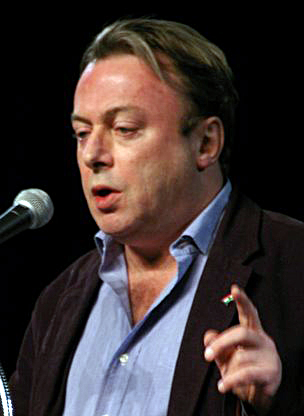
As a speaker, Hitchens was legendary, often engaging in high-profile debates against prominent religious figures and intellectuals. His style was characterized by rapid-fire wit, extensive historical and literary allusions, and an almost theatrical command of the stage. He possessed a remarkable ability to articulate complex arguments with clarity and persuasive force, even when confronting deeply held beliefs. His debates, many of which are available online, offer a masterclass in rhetorical combat and intellectual sparring, making them invaluable resources for understanding his arguments against theism and political ideologies.
✨ The 'Four Horsemen' & New Atheism
Hitchens is perhaps most widely recognized as one of the 'Four Horsemen' of New Atheism, alongside Richard Dawkins, Sam Harris, and Daniel Dennett. This informal grouping coalesced around a shared conviction that religious faith is not only unfounded but actively harmful to human progress and reason. While each had their distinct approach, they collectively amplified a secular, rationalist critique of religion, contributing significantly to the resurgence of atheistic and agnostic thought in the public sphere during the early 2000s. Their influence can be seen in the growing number of individuals identifying as religiously unaffiliated.
⚖️ Hitchens' Razor: A Tool for Skepticism
Central to Hitchens' epistemological toolkit is his famous dictum: 'What can be asserted without evidence can also be dismissed without evidence.' This principle, often referred to as Hitchens' Razor, serves as a powerful heuristic for evaluating claims, particularly those made in the absence of empirical support. It’s a direct challenge to faith-based assertions and a call for intellectual rigor, applicable not just to religious claims but to any unsubstantiated assertion in science, politics, or everyday life. Its utility lies in its simplicity and its demand for accountability in argumentation.
🌍 Political Evolution & Shifting Stances
Hitchens' political journey was complex and often controversial, marked by a significant shift in his views on foreign policy. Initially a staunch socialist and critic of Western imperialism, he became a vocal supporter of the War on Terror following the September 11th attacks, advocating for interventions in Afghanistan and Iraq. This stance alienated many of his former allies on the left and led to intense debate about his intellectual consistency and the nature of anti-imperialism. Understanding this evolution is crucial for grasping the full spectrum of his political thought.
💥 Controversies & Criticisms
Hitchens was never one to shy away from controversy, and his career was punctuated by numerous debates and criticisms. His sharp critiques of figures like Mother Teresa and his support for the Iraq War drew significant backlash from various quarters. Some critics accused him of intellectual dishonesty, opportunism, or a form of 'liberal Zionism' that contradicted his earlier anti-establishment leanings. His willingness to engage with and even provoke such opposition, however, was also seen by many as a sign of his intellectual courage and commitment to free speech.
💡 Legacy & Enduring Influence
The legacy of Christopher Hitchens is that of a formidable intellectual provocateur whose influence continues to resonate. His advocacy for atheism, his commitment to secularism, and his relentless pursuit of truth through rigorous argumentation remain potent forces. His writings continue to be read, debated, and cited by a new generation of thinkers grappling with questions of faith, reason, and politics. The enduring power of his prose and the sharpness of his intellect ensure his place as a significant cultural commentator of our time, inspiring further critical inquiry into the nature of belief and power.
Key Facts
- Year
- 2011
- Origin
- United Kingdom
- Category
- Cultural Commentary
- Type
- Person
Frequently Asked Questions
What is Christopher Hitchens' most famous book?
While Hitchens wrote numerous influential books, God Is Not Great (2007) is arguably his most famous and widely recognized work. It serves as a foundational text for New Atheism and clearly articulates his arguments against religious belief and its perceived negative impact on society. His memoir, Hitch-22, is also highly regarded for its personal insights and intellectual journey.
What is 'Hitchens' Razor'?
'Hitchens' Razor' is the principle that 'what can be asserted without evidence can also be dismissed without evidence.' It's a critical thinking tool that demands empirical support for any claim, particularly those made in areas like religion or pseudoscience. It's a powerful way to cut through unsubstantiated assertions and promote a more evidence-based approach to knowledge.
Was Christopher Hitchens always an atheist?
No, Hitchens was not always an atheist. He was raised in a religious household and attended religious schools. His journey to atheism was a gradual intellectual process, heavily influenced by his reading and his critical examination of religious doctrines and institutions. His definitive break with religion is detailed in his writings, particularly in God Is Not Great.
What was Hitchens' stance on politics?
Hitchens had a complex political evolution. He began as a democratic socialist and critic of Western foreign policy. However, post-9/11, he became a prominent supporter of the War on Terror and military interventions, a stance that caused significant controversy and alienated many on the left. His political views were often characterized by a fierce opposition to authoritarianism and a belief in the necessity of confronting oppressive ideologies.
Where can I find recordings of Hitchens' debates?
Many of Christopher Hitchens' most famous debates are widely available online, particularly on platforms like YouTube. Searching for 'Christopher Hitchens debate' will yield numerous results, including his well-known confrontations with figures like Douglas Wilson and William Lane Craig. These recordings offer direct insight into his debating style and argumentative prowess.
What is 'New Atheism'?
New Atheism is a movement that emerged in the early 21st century, characterized by a strong, public advocacy for atheism and a critical stance against religion. Key figures include Christopher Hitchens, Richard Dawkins, Sam Harris, and Daniel Dennett. They argue that religion is not only unsubstantiated but also harmful, and they promote secularism and scientific reasoning as superior frameworks for understanding the world.