
Contents
- 🏆 The Gold Standard of Daytime
- 📺 Eligibility & Categories
- 🗳️ The Voting & Judging Process
- 🎭 The Soap Opera Powerhouse
- 🎤 Talk Shows & Digital Evolution
- ⚖️ NATAS vs. ATAS Jurisdictions
- 📉 Ratings & Cultural Relevance
- 🎟️ Attending the Ceremony
- 🔮 The Future of Daytime Media
- Frequently Asked Questions
- Related Topics
Overview
Established in 1974 to separate daytime excellence from the Primetime Emmy's shadow, this ceremony validates the industrial backbone of American television. While critics often dismiss the circuit as a soap opera echo chamber, the Daytime Emmys govern a massive economic engine encompassing talk shows, game shows, and instructional programming. The National Academy of Television Arts and Sciences (NATAS) manages the voting, which has survived numerous scandals involving block-voting and category fraud, most notably the 2018 controversy that saw Patrika Darbo stripped of her award. As linear television viewership declines, the awards have pivoted to streaming platforms like Netflix and Amazon, which now dominate the Children’s and Animation categories. The ceremony remains the ultimate gatekeeper for the 'EGOT' pursuit, providing the essential 'E' for daytime legends like Whoopi Goldberg and Jennifer Hudson.
🏆 The Gold Standard of Daytime
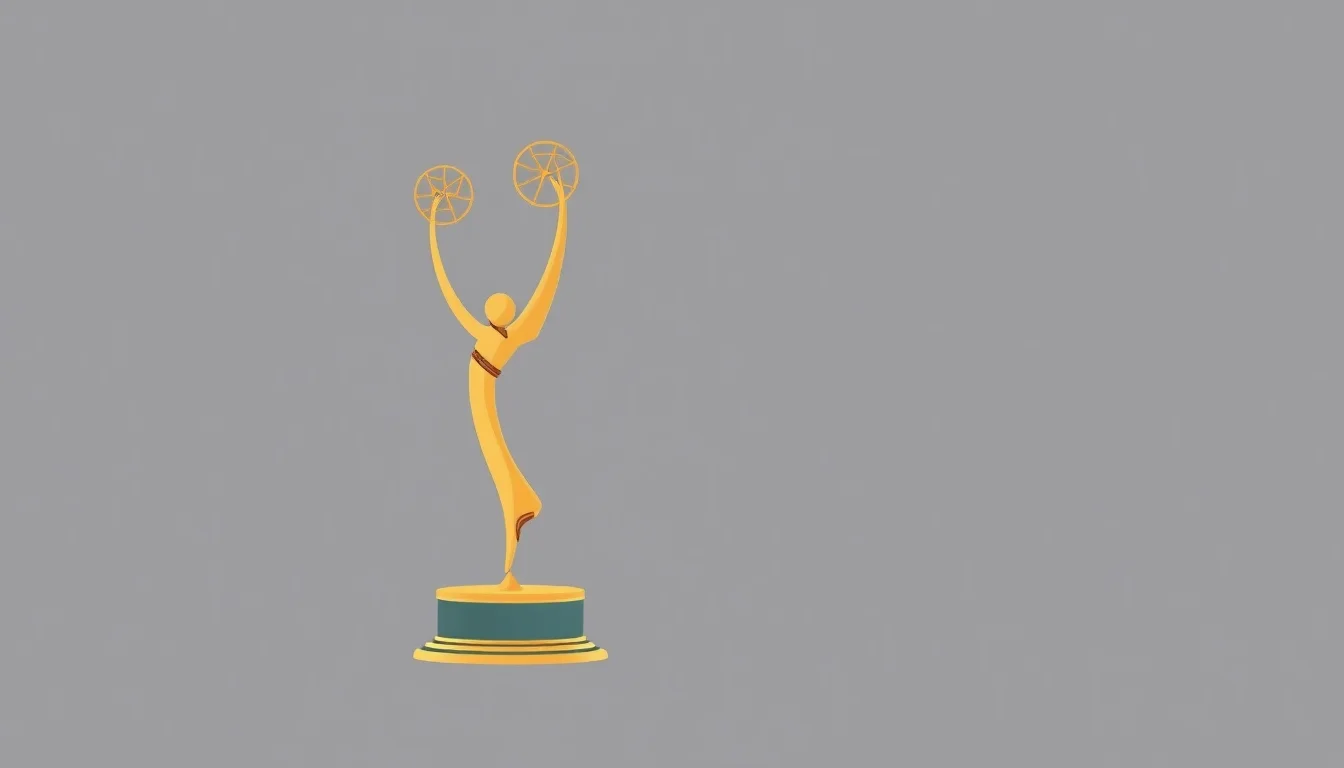
The Daytime Emmy Award serves as the primary recognition for excellence in American daytime television programming, administered by the National Academy of Television Arts and Sciences. Established in 1974 to distinguish daytime achievements from the Primetime Emmy Awards, the ceremony honors everything from long-running daytime dramas to culinary programs and legal shows. It is the definitive benchmark for professionals working outside the high-stakes evening slots, providing a platform for the industry icons who define the daily viewing habits of millions. For creators, winning a 'Daytime Emmy' is the highest validation of craft within the specific constraints of daily production cycles and lower-budget environments.
📺 Eligibility & Categories
Eligibility for the awards is strictly defined by broadcast hours, typically requiring programs to air between 2:00 AM and 6:00 PM. This window encompasses the traditional broadcast network blocks but has expanded significantly to include digital platforms like Netflix and Hulu. Categories are divided into 'Creative Arts' and the main telecast, covering acting, directing, writing, and technical achievements. Unlike the Academy Awards, the Daytime Emmys must constantly recalibrate their categories to reflect the death of the traditional soap opera and the rise of the social media personality hosting lifestyle segments.
🗳️ The Voting & Judging Process
The judging process relies on peer-group panels where professionals in specific crafts—such as directors or writers—evaluate the work of their contemporaries. Voters review 'blue ribbon' reels, which are curated clips submitted by producers to showcase a performer's best work from the preceding calendar year. This system has faced criticism for favoring 'big moments' over consistent season-long performance, a tension often discussed by media analysts. Despite the internal debates, the process remains the most rigorous peer-review system in the entertainment sector, ensuring that the statuette maintains its prestige among guild members.
🎭 The Soap Opera Powerhouse
Historically, the soap opera has been the backbone of the ceremony, driving both viewership and controversy. Shows like General Hospital and The Young and the Restless dominate the acting categories, often leading to 'sweeps' that frustrate fans of smaller productions. The legendary 19-year losing streak of Susan Lucci remains the most famous narrative in the award's history, highlighting the high emotional stakes for performers. As the number of surviving soaps has dwindled to a handful, the NATAS has had to consolidate categories to maintain a competitive environment for these legacy programs.
🎤 Talk Shows & Digital Evolution
The 'Outstanding Informative Talk Show' and 'Outstanding Entertainment Talk Show' categories represent the modern commercial heart of the Daytime Emmys. Icons like Oprah Winfrey and Ellen DeGeneres have historically used the platform to cement their status as cultural gatekeepers. Recently, the rise of web series and short-form content has forced the Academy to create the 'Outstanding Daytime Special' and 'Legal/Courtroom Program' designations. This shift reflects the transition from a linear broadcast model to an on-demand ecosystem where 'daytime' is a vibe rather than a specific time on a clock.
⚖️ NATAS vs. ATAS Jurisdictions
A critical distinction exists between the National Academy of Television Arts and Sciences (NATAS), which handles the Daytime, Sports, and News Emmys, and the Television Academy (ATAS), which manages Primetime. This jurisdictional split often leads to confusion regarding which body governs specific shows, particularly with the advent of global streaming. In 2022, a major realignment occurred where categories were moved based on content type rather than airtime, meaning children's content now has its own dedicated ceremony. This restructuring was designed to end decades of bureaucratic friction between the New York and Los Angeles-based academies.
📉 Ratings & Cultural Relevance
While the cultural footprint of the Daytime Emmys remains significant, the ceremony has struggled with declining television ratings over the last decade. This mirrors the broader trend of audience fragmentation as viewers migrate to YouTube and TikTok. To combat this, the producers have experimented with different networks, moving from ABC and CBS to cable channels like Pop TV and eventually to live-streaming on Twitter and YouTube. The 'Vibe Score' for the event remains high among hardcore fans, but the challenge lies in capturing the attention of a younger demographic that views traditional broadcast awards as relics of a previous era.
🎟️ Attending the Ceremony
Attending the Daytime Emmy Awards is generally a more accessible experience than the Primetime equivalent, though it remains an industry-only affair for the most part. Tickets are primarily distributed through agencies, production companies, and the Academy membership itself. For the general public, 'Fan Zones' and red carpet bleacher seats are occasionally made available through promotional contests. If you are a professional looking to enter, you must be a member of NATAS and pay the required entry fees, which vary depending on the category and the size of the production team.
🔮 The Future of Daytime Media
The future of the Daytime Emmy Award is inextricably linked to the survival of the daily broadcast model and its adaptation to the internet. We are seeing a move toward 'genre-based' awards rather than 'time-based' awards, which may eventually render the 'Daytime' label obsolete. The winners of the next decade will likely be those who successfully bridge the gap between legacy television and the creator economy. As the lines blur, the Academy must decide if it will remain a gatekeeper for traditional Hollywood or evolve into a broader arbiter of all professional video content regardless of the screen size.
Key Facts
- Year
- 1974
- Origin
- New York City, USA
- Category
- Media & Entertainment Awards
- Type
- Award Ceremony
Frequently Asked Questions
What is the difference between a Daytime Emmy and a Primetime Emmy?
The primary difference lies in the airtime and the governing body. Daytime Emmys are awarded by the National Academy of Television Arts and Sciences for programs airing between 2 AM and 6 PM. Primetime Emmys are handled by the Academy of Television Arts & Sciences for shows airing in the evening. While both use the same iconic statuette, they represent different sectors of the TV industry.
Can streaming shows win Daytime Emmys?
Yes, streaming content is now fully eligible and increasingly dominant. Shows on platforms like Netflix, Hulu, and Amazon compete directly with traditional broadcast shows. The criteria focus on the nature of the content—such as talk shows, legal dramas, or morning programs—rather than the method of delivery. This has allowed the Daytime Emmys to remain relevant in a post-cable world.
Who has won the most Daytime Emmy Awards?
The game show Jeopardy! holds the record for the most wins by a single program, with over 40 awards. Individually, performers like Erika Slezak of 'One Life to Live' hold records for most wins in the Lead Actress category. The competition is notoriously fierce among daytime dramas, which often accumulate hundreds of nominations over decades of continuous production.
How are the winners chosen?
Winners are selected through a peer-judging system. Members of the Academy who work in specific fields—like lighting, acting, or writing—volunteer to sit on panels. They watch 'submission reels' provided by the entrants and score them based on technical and artistic merit. The results are audited by an independent accounting firm to ensure the integrity of the voting process.
Why did the Children's categories leave the Daytime Emmys?
In 2022, NATAS and the Television Academy agreed to a major realignment. Because children's programming is now consumed primarily via on-demand platforms rather than specific daytime blocks, it was moved to its own dedicated ceremony: the Children's & Family Emmy Awards. This allows for a more focused celebration of that specific audience demographic.